Physical Address
304 North Cardinal St.
Dorchester Center, MA 02124
Physical Address
304 North Cardinal St.
Dorchester Center, MA 02124

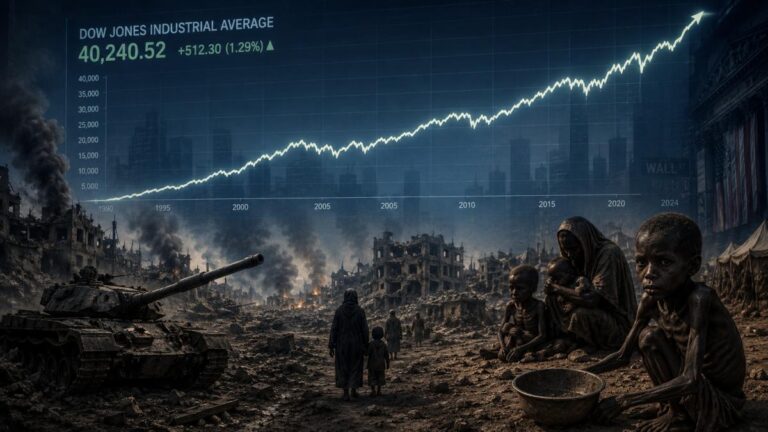
War headlines. Oil shocks. Rent that swallows a paycheck. And somehow, against all of it, the index prints another record. The instinct is to call the whole thing a casino, rigged and detached, a number that means nothing. That instinct is half right and far more dangerous than the casino theory, because the market is not detached at all. It is measuring something real. It is just measuring something most people were never told to look at.

Oil markets do not deal in nuance. They deal in headlines, and the headline this week was unambiguous: the war is over, the Strait of Hormuz reopens, sell the premium. Brent crude has obliged, sliding toward $78 per barrel and erasing roughly 38 percent of its value since the April peak, with the steepest legs of that decline landing in the two sessions following the announcement that Washington and Tehran had signed a memorandum of understanding to end hostilities and lift the naval blockade.

Eighteen months ago, the business case for replacing a human team with software fit on a single slide. Salary, benefits, and overhead on one side; a per-token API rate on the other. The API rate was a rounding error, and it was getting cheaper every quarter. The decision looked obvious, which is exactly the kind of decision that should make a contrarian nervous.
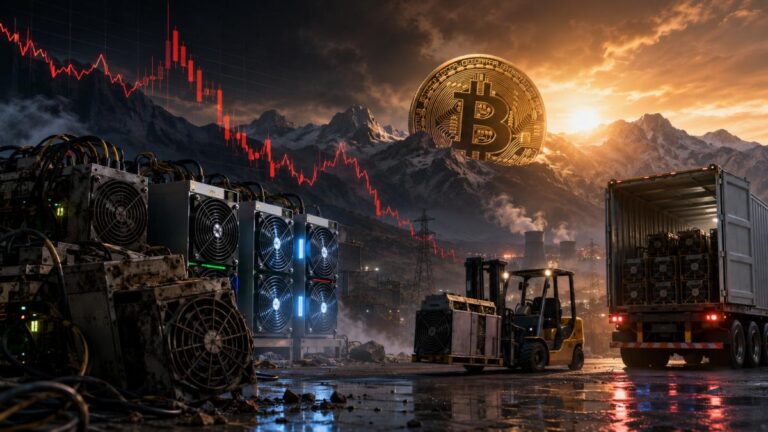
Every cycle hands contrarians the same temptation: wait for the miners to break, then back up the truck. The logic is seductive because it has worked before. When the people who literally manufacture the asset can no longer afford to keep the machines running, the marginal seller is exhausted, the float tightens, and price tends to find a floor. The problem with treating that as a mechanical buy signal in 2026 is that the conditions which made it reliable have quietly eroded, and the data this month says the squeeze is genuine but unfinished.

On a Friday evening in June, at precisely 5:21pm Eastern, the most valuable private company in artificial intelligence received a letter that rewrote the risk profile of the entire sector. The US government, invoking national security export controls, instructed Anthropic to bar every foreign national on earth from its two newest models. Because the order swept in the company's own non-citizen engineers, selective compliance was mechanically impossible. So Anthropic did the only thing the directive left open to it: it switched the models off for everyone, everywhere, three days after launch.

Picture an investor in the 1940s hunched over a set of financial statements, calculator in hand, hunting for the handful of stocks the crowd had ignored. Odds are that investor had absorbed the teachings of Benjamin Graham, the man most people credit as the founder of value investing. Graham distrusted enthusiasm. He built simple, almost stubbornly conservative rules to keep ordinary investors from overpaying, and one of those rules has outlived nearly every market regime since: the Graham Number.

There is a thesis making the rounds in every investment forum, every analyst note, and every infrastructure fund pitch deck right now, and it goes like this: the real AI trade is not chips, it is electrons. Data centres are devouring power. Grids cannot keep up. Therefore, buy everything that generates, transmits, or stores electricity, and wait.

Scroll through any investing forum right now and the word "bubble" arrives before the second sentence. The comparison writes itself: a narrow band of technology names dragging the entire index higher, valuations that make traditional metrics look quaint, and a chorus of skeptics pointing at the year 2000 as the obvious template. Yet beneath the noise sits a more interesting argument, one that retail and professional investors keep circling back to. What if the spending driving this rally is structurally different from the speculative excess that defined the dot-com mania? What if artificial intelligence capital expenditure behaves less like a luxury and more like a cost-cutting necessity that companies fund even when the economy turns?
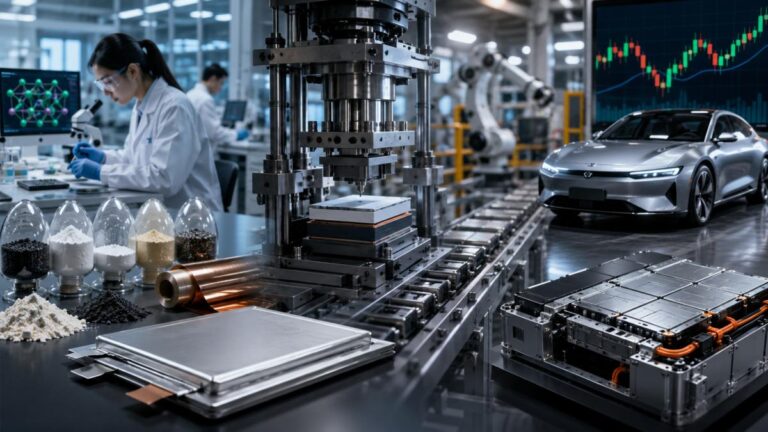
Every few months a new headline declares that the solid-state battery, the so-called holy grail of energy storage, has finally arrived. The latest comes from Wuhan, where Dongfeng Motor says its 350 Wh/kg solid-state cell will reach mass production and vehicle integration in the second half of 2026, enabling driving ranges past 1,000 km. The specifications are genuinely impressive: cells that keep working after being crushed by 50 percent, that survive 170 degrees Celsius without smoke, and that retain over 74 percent of their charge at minus 30 degrees. For anyone tracking the EV supply chain, it is the kind of announcement that moves share prices.
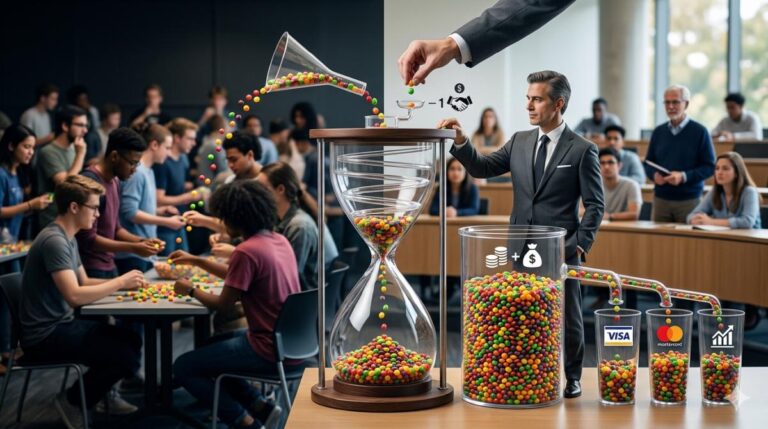
A professor at Duke recently ran an experiment with his Silicon Valley class. He handed each student a bag of Skittles and set them loose: trade your way to a single-color hoard, and the biggest hoard of each color earns a free pass on a homework assignment. Twenty minutes, open-floor haggling, all the frantic strategy you would expect from ambitious students. Who's holding the reds? Should I dump my purples early? Can I trust the guy in the corner?