Physical Address
304 North Cardinal St.
Dorchester Center, MA 02124
Physical Address
304 North Cardinal St.
Dorchester Center, MA 02124


The bear case on artificial intelligence has completed its journey from contrarian to consensus, and almost nobody has noticed what that transition costs. When a position is held by career Treasury analysts, the Bank for International Settlements, the ratings agencies, a large share of financial media and roughly every second post on investment social media, it has stopped being an insight. It has become the ambient mood. Arguing that the AI trade is overextended in mid 2026 is not a call. It is a description of the weather.

There is a story circulating in energy circles that goes roughly like this. The Middle East is on fire, crude is in the high eighties after touching triple digits, the Strait of Hormuz has been throttled for months, and the obvious escape hatch is sitting right there in plain sight. Solar modules cost nine cents a watt. Sodium-ion batteries just entered mass production. Surely, if the crisis grinds on for another year or two, the world simply routes around the barrel.
For two decades, the largest technology companies were the closest thing markets had to a sure bet. They generated cash faster than they could spend it, returned billions to shareholders through buybacks, and carried balance sheets pristine enough to make sovereign treasuries look leveraged. That model just cracked, and the crack is worth understanding before deciding what it means for a portfolio.
Three weeks ago, South Korea had the best performing major stock market on the planet. Today it is a live demonstration of what happens when a leveraged retail bubble meets a forced-selling doom loop, and the mechanics on display in Seoul should worry anyone holding US equities on borrowed money.
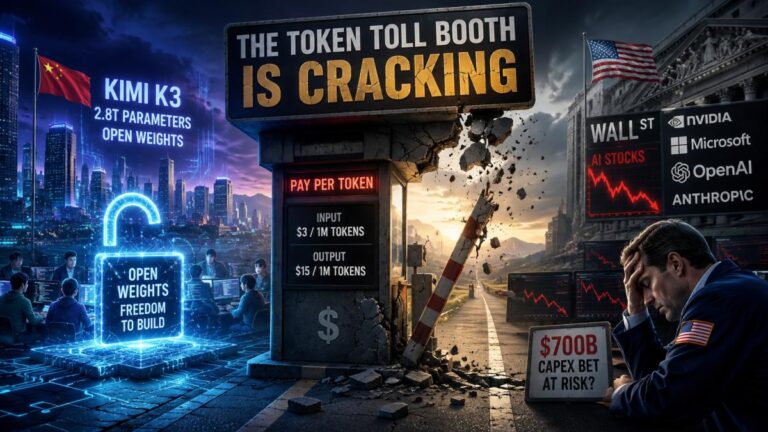
Wall Street has a short memory, but not that short. When Beijing-based Moonshot AI released its Kimi K3 model on July 16, traders didn't need the parallel explained to them. AI and semiconductor stocks sold off sharply as the phrase "DeepSeek moment" ricocheted across trading desks, recalling January 2025, when a then-obscure Chinese lab wiped out one of the largest single-day market-value losses in history by demonstrating that frontier AI could be built for a fraction of American budgets.
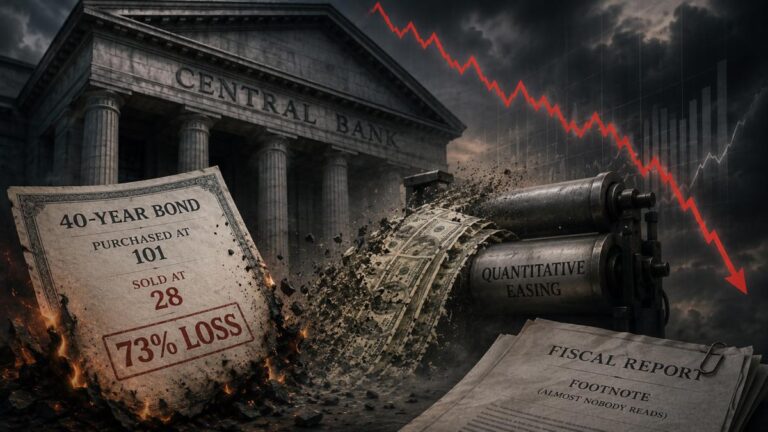
Imagine a fund manager who bought a 40-year bond at 101 and sold it at 28, locking in a 73% loss. Now imagine that manager did this not once but systematically, across a portfolio worth hundreds of billions, using money conjured from nothing — and then sent you the bill. You would expect a scandal. Instead, you get a footnote in a fiscal report that almost nobody reads.

America's emergency oil stockpile has been drained to levels not seen in 43 years. The Strait of Hormuz is once again a shooting gallery. And until this week, crude oil traded as if none of it mattered.
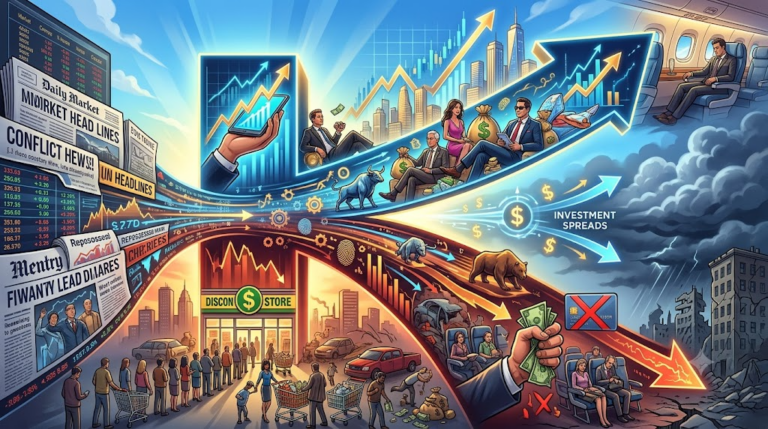
Every major financial outlet has now published its version of the same story. Markets are at records, households are struggling, and the gap between the two keeps widening. The explanation phase of this narrative is over. When CNBC, Goldman Sachs, Fortune and CNN are all running the identical theme in the same month, the disconnect itself is fully priced as a talking point.
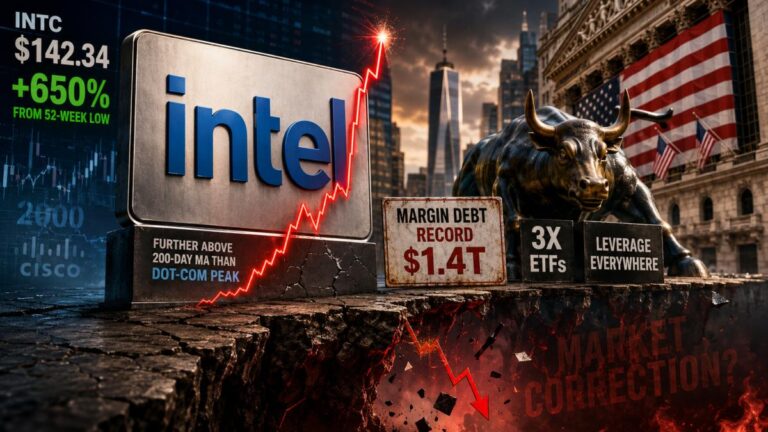
There's a particular kind of market moment that only becomes obvious in hindsight: the point at which good news stops lifting prices and starts confirming that everything achievable has already been achieved. We may be living through one of those moments right now — and the clearest tell isn't hiding in an obscure credit spread or a yield curve model. It's sitting in plain sight, wearing a name every investor over forty grew up with: Intel.
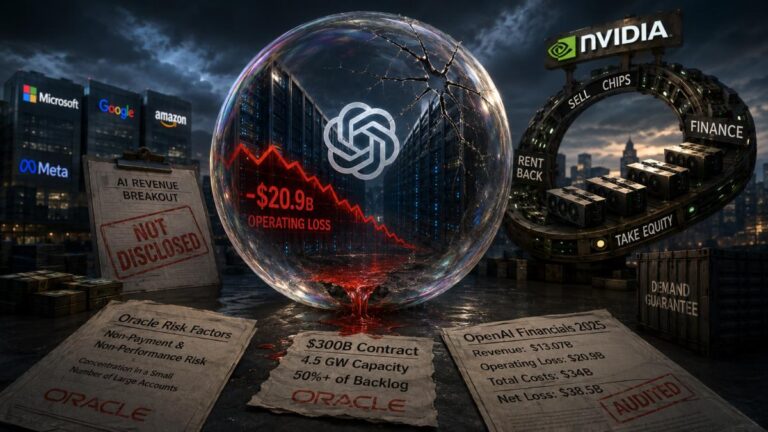
Last month we asked whether the AI bubble debate was missing the point on both sides. That article was about price: concentration, circular financing, and the gap between valuations and cash flows. The weeks since have handed the market something more fundamental to chew on. A set of leaked, audited financials