Physical Address
304 North Cardinal St.
Dorchester Center, MA 02124
Physical Address
304 North Cardinal St.
Dorchester Center, MA 02124

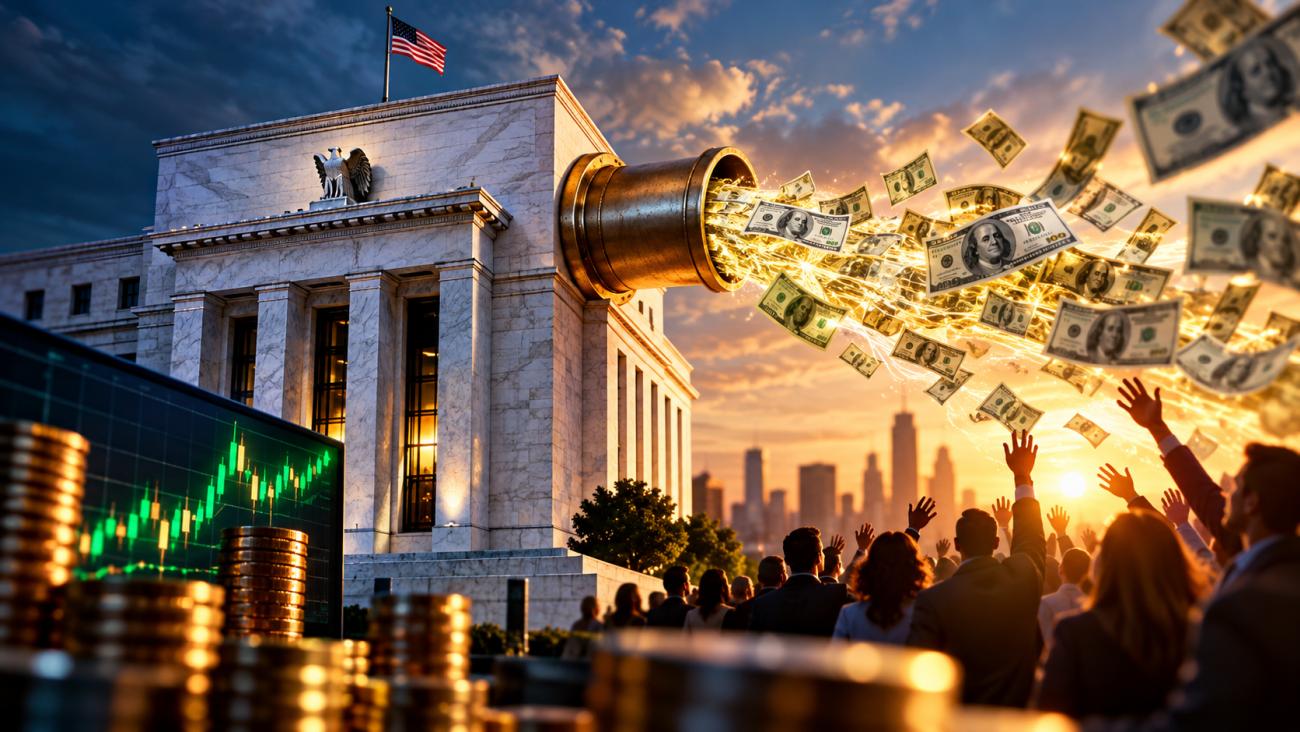
When the Federal Reserve raises interest rates, most investors brace for pain. Borrowing gets more expensive, stocks wobble, and headlines warn that something is about to break. That reflex was on full display this month. But one of the most closely followed liquidity analysts in the world argues that the old rulebook no longer fits. In today’s debt-heavy economy, he says, a rate hike can put more money into people’s pockets, not less.
It sounds backwards. Stick with it, because once you see the mechanics, the whole picture of what the Fed is doing starts to look very different.
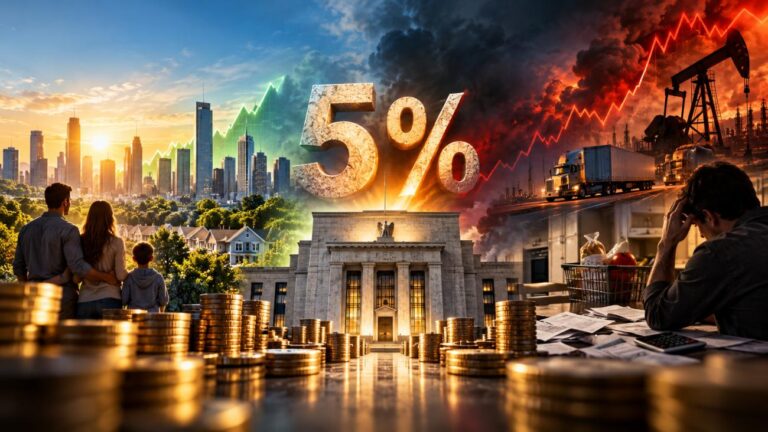
The Fed lifted its benchmark rate by a quarter point to a range of 3.75% to 4%. It was the first increase since July 2023, and officials signalled that another could follow before the year is out. The main culprit is energy. Oil prices surged earlier this year, and inflation has been stuck above the Fed’s 2% target for more than five years.
The first reaction was exactly what the textbook predicts. Stocks slipped and the 10-year Treasury yield touched its highest level since 2007. Crypto sold off too. Then something odd happened. By Thursday, bonds and stocks were rallying together, and crypto pushed higher right through the Fed’s first hike in three years. We looked at whether that crypto bounce had real buyers behind it in our piece on why Bitcoin shrugged off the rate hike. The bigger question is why the hike didn’t bite harder across the board.
Here is the classic story, in simple terms. When rates go up, loans cost more. Businesses borrow less to expand, households think twice about a new car or a bigger mortgage, and spending cools. Less spending means less pressure on prices, and inflation eventually eases. That’s the whole point of a hike: to slow the economy down on purpose.
For most of the last century, this worked because the private sector was the main borrower. Families and companies owed the money, so when rates rose, they felt the squeeze.
Today the largest single borrower in the American economy is the government itself. Federal debt has grown to the point where it is bigger than the whole economy. That changes how a rate hike flows through the system.
Think about it from the other side of the loan. Every time the government pays interest, someone receives it. That someone is the bondholder: pension funds, insurance companies, banks, money market funds, and ordinary savers who own Treasury bills directly or through funds. When rates rise, the government has to pay those holders more.
Michael Howell, the former Salomon Brothers research director who now runs the Capital Wars newsletter, one of the most widely read finance publications on Substack, calls this a flip in the system’s polarity. When the government is a huge net borrower, raising rates means transferring more income from the government to the private sector. Put simply, the Fed is making the government pay the public more rent for its money. That extra cash can be spent or invested, which works more like a stimulus than a brake.
The numbers involved are not small. Interest on the national debt already runs above a trillion dollars a year, and the Congressional Budget Office’s baseline projections show it roughly doubling over the next decade. The Peter G. Peterson Foundation has tracked how interest costs are on course to hit all-time highs by almost any measure.
To be fair, not every dollar lands in American wallets. Some goes to foreign holders, and some goes back to the Fed itself. But a large share flows to domestic savers and institutions. Here is a simple example. If you hold money in a Treasury bill fund, your income went up the moment the Fed hiked. The same is true across trillions of dollars of short-term government debt, and that stream of income doesn’t disappear just because the headline says “tightening.”
This connects to something we covered recently in The Fundamental Shift in Global Bond Markets, where we looked at rising yields through the lens of an unsustainable debt load. Howell offers a competing reading, and it deserves a hearing.
His view is that long-term bond yields tend to track how fast the economy is growing in cash terms. That means real growth plus inflation added together, which economists call nominal GDP. By his estimate, US nominal growth is running at roughly 7% to 8% a year, a pace not seen since the mid-1980s. Back then, 10-year yields sat near similar levels. So from his angle, a 10-year yield around 5% isn’t a panic signal. It’s the bond market catching up to a hotter economy, and he expects it could test 6% if growth holds.
Interestingly, the Fed chair seemed to be making the same point in plain view. In his press conference, Kevin Warsh said the data shows the economy has strengthened and that underlying growth is higher. That’s not how a central banker sounds when he thinks the bond market is in a debt crisis.
Here’s the second counterintuitive piece. Howell suggested before the meeting that a modest hike might help long-term bonds rather than hurt them. The logic is about trust. Investors who lend money for 10 or 30 years worry most about inflation eating their returns. When the Fed acts firmly on inflation, those long-term lenders feel a little safer, so they may demand a bit less extra yield to hold long bonds.
So far the evidence is mixed. Yields rose on the day of the decision, then bonds rallied later in the week. One week proves nothing either way, but it’s worth watching whether long yields settle if the Fed follows through with a second hike.
The bigger idea behind Howell’s argument is that interest rates matter much less than most people think. Most of today’s financial activity, he argues, is not raising fresh money for new projects. It’s refinancing old debt as it comes due. And when your main job is rolling over debt, the price of borrowing matters less than whether anyone is willing to lend to you at all.
That is why he watches the plumbing of the financial system rather than the headline rate. The Fed has quietly been supporting that plumbing for some time. It stopped shrinking its bond holdings and began buying short-term Treasury bills in December 2025 to keep enough cash in the banking system. The Treasury has also been leaning on buybacks to steady the long end, with limited effect. Put together, the message is that policymakers will raise rates to look tough on inflation, while keeping the money flowing underneath.
You don’t need a Bloomberg terminal to follow this. Howell points to three simple signals.
The first is the overnight lending rate between big financial players, known as SOFR. The New York Fed publishes SOFR every business morning. If it starts jumping well above the Fed’s target range, it means cash is getting scarce in the system, and that’s an early warning sign.
The second is the MOVE index, which is essentially a fear gauge for the bond market. It tracks how much volatility traders expect in Treasury yields. Calm readings mean the plumbing is working. Sharp spikes mean trouble may be brewing.
The third is the shape of the yield curve, which compares short-term and long-term rates. A curve that steepens quickly can signal that long-term lenders are demanding more reward for waiting, a sign of nervousness about the future.
Not everyone agrees, and the counter-case is serious. In a recent conversation with Doomberg, investor James Lavish argued that long yields keep rising despite the Fed’s efforts because the sheer volume of government debt coming to market is overwhelming buyers. From that angle, higher yields are a warning about supply, not a sign of healthy growth.
There’s also a squeeze on ordinary people that the “stimulus” framing can hide. Higher rates help those who own government debt, but they hurt anyone trying to buy a home or carry a credit card balance. The income transfer isn’t spread evenly. It favours savers with assets over younger households without them. And if Howell is right that the real endgame is quiet money creation, the long-run cost shows up as a dollar that buys less every year.
If you take Howell’s view seriously, a few practical ideas follow. First, don’t panic-sell every time the Fed hikes. In this environment, a hike isn’t automatically bad news for markets. Second, cash and short-term Treasury bills pay more after each hike, and that income is real. Third, Howell’s broader thesis is that governments will keep leaning on money creation to manage their debts. That’s why he favours holding a small slice of assets that tend to benefit from it, such as gold and Bitcoin, sized modestly because they swing hard in both directions.
Finally, watch the plumbing gauges above rather than the headlines. The rate announcement gets the attention, but the funding markets underneath will tell you first if something is genuinely going wrong. For more on who’s being quietly asked to absorb all this government debt, see our look at how governments are drafting pensions into market support.
The Fed says it is tightening. The money flowing through the system says something more complicated. For a patient investor, knowing the difference is an edge.
This article is for informational purposes only and does not constitute financial advice.