Physical Address
304 North Cardinal St.
Dorchester Center, MA 02124
Physical Address
304 North Cardinal St.
Dorchester Center, MA 02124


The surface of today's market looks deceptively calm. Equity indices remain elevated, volatility is contained, and the dominant narrative still leans toward soft landings, resilient consumers, and technological tailwinds. But beneath that surface, a different story is gaining traction, particularly on X. Threads are going viral drawing uncomfortable parallels to the years leading up to the 2008 financial crisis. The focus this time is not subprime mortgages. It is something less visible, less regulated, and arguably more complex: private credit.

In the closing months of the last great bull cycle, the dominant narrative was simple: innovation would outrun instability. Investors piled into long-duration growth assets, trusting that central banks could fine-tune the economy and that technological acceleration, especially around artificial intelligence, would justify almost any valuation multiple.

The narrative around crypto is evolving again. For years, the space was dominated by speculation, innovation cycles, and volatile retail-driven markets. Today, a quieter but far more significant transformation is underway. Real-world assets, often referred to as RWAs, are moving on-chain at an accelerating pace.
This is not just another trend. It represents a structural shift in how capital is issued, managed, and traded. Treasuries, private credit, and even equities are being tokenized and integrated into blockchain ecosystems. Estimates suggest that tens of billions of dollars in real-world value are already represented on-chain, and that number continues to grow.
The relationship between social media and financial markets is not new, but what is happening now in crypto feels fundamentally different. What used to be a loose connection between sentiment and price action has evolved into something much tighter, faster, and more reflexive. X, formerly known as Twitter, is no longer just a place where traders discuss markets. It is rapidly becoming a core layer in how those markets actually move.
A recent conversation on the Jimmy Dore Show cut through the usual noise of mainstream political commentary and landed on something far more structural: the deliberate architecture of a technocratic control grid that is being built, piece by piece, across the Western world. The guest was Professor Jiang Xueqin, the Chinese-Canadian educator and commentator known widely as "Professor Jiang," a Yale alumnus with two decades of hands-on experience in global education reform and a sharp, unsentimental read on how power actually operates across both East and West. His analysis of where the United States and the broader Western empire are heading is sobering. The picture is not pretty, but it is not hopeless either.

On the afternoon of April 18, 2026, a single function call to a layer zero contract unlocked what would become the largest DeFi exploit of the year. Within 46 minutes, 116,500 rsETH tokens worth approximately $293 million had been stolen from Kelp DAO, converted into clean borrowed ETH across three major lending protocols, and the contagion had already begun spreading outward through the interconnected architecture of decentralised finance. By the time the dust settled, more than $10 billion in total value locked had been wiped from the sector.

The Strait of Hormuz is effectively closed. Ships that once moved through the waterway at a rate of 130 per day had dropped to around six transits per day by March, a collapse of roughly 95 percent, according to UNCTAD's rapid economic assessment. That single bottleneck carries about a fifth of the world's daily oil consumption, a similar share of global LNG trade, and — a fact most news anchors have glossed over — somewhere between 30 and 45 percent of global fertiliser exports. Energy analyst Gary Stevenson returned to YouTube recently after a six-month absence making a documentary, and his first video back was not a gentle reintroduction. It was a systematic dismantling of everything you think you know about protecting yourself from an energy price crisis. This article unpacks the core argument and adds the data to back it up.
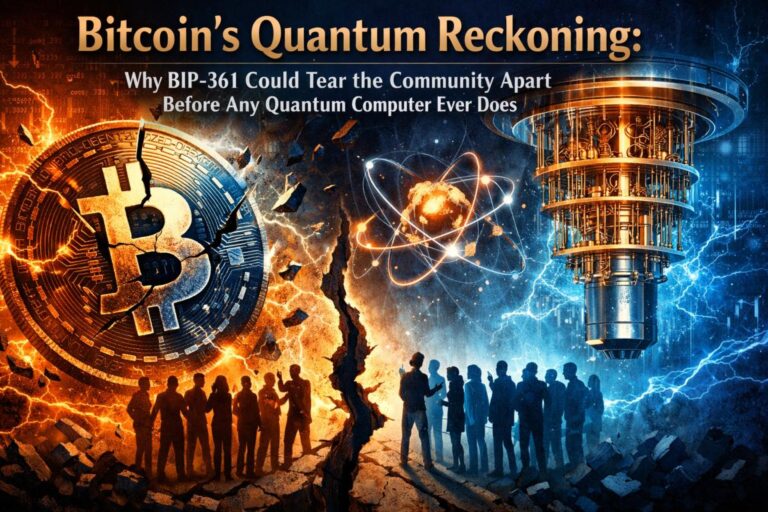
The Bitcoin community has spent years dismissing quantum computing threats as FUD reserved for altcoin promoters and gold bugs. That posture is no longer tenable. This week, cypherpunk and Bitcoin Core developer Jameson Lopp, alongside five co-authors, published BIP-361, a formal three-phase proposal to freeze all coins sitting in quantum-vulnerable legacy addresses. The backlash was immediate, fierce, and overwhelmingly negative. Somewhere around 95% of replies on X opposed it. And yet, the people screaming loudest against BIP-361 have not offered a coherent alternative. That is the real story here for anyone watching Bitcoin from an investment angle.

A TikTok is doing the rounds in personal finance circles. Two friends, Jake and Marcus, each start with $50,000. Jake buys a rental property. Marcus buys index funds. The video walks through ten years of numbers and concludes, more or less, that the spreadsheet favours Marcus. Comment sections are filling up with people treating this as settled science. It is not.

Most people treat Middle East conflict as background noise. A tragic headline that scrolls past between sports scores and stock tickers. Something geopolitically significant, but practically distant from the real business of managing a retirement portfolio, keeping up with inflation, and making sure your income lasts longer than you do. That assumption is exactly what gets retirees into trouble.