Physical Address
304 North Cardinal St.
Dorchester Center, MA 02124
Physical Address
304 North Cardinal St.
Dorchester Center, MA 02124

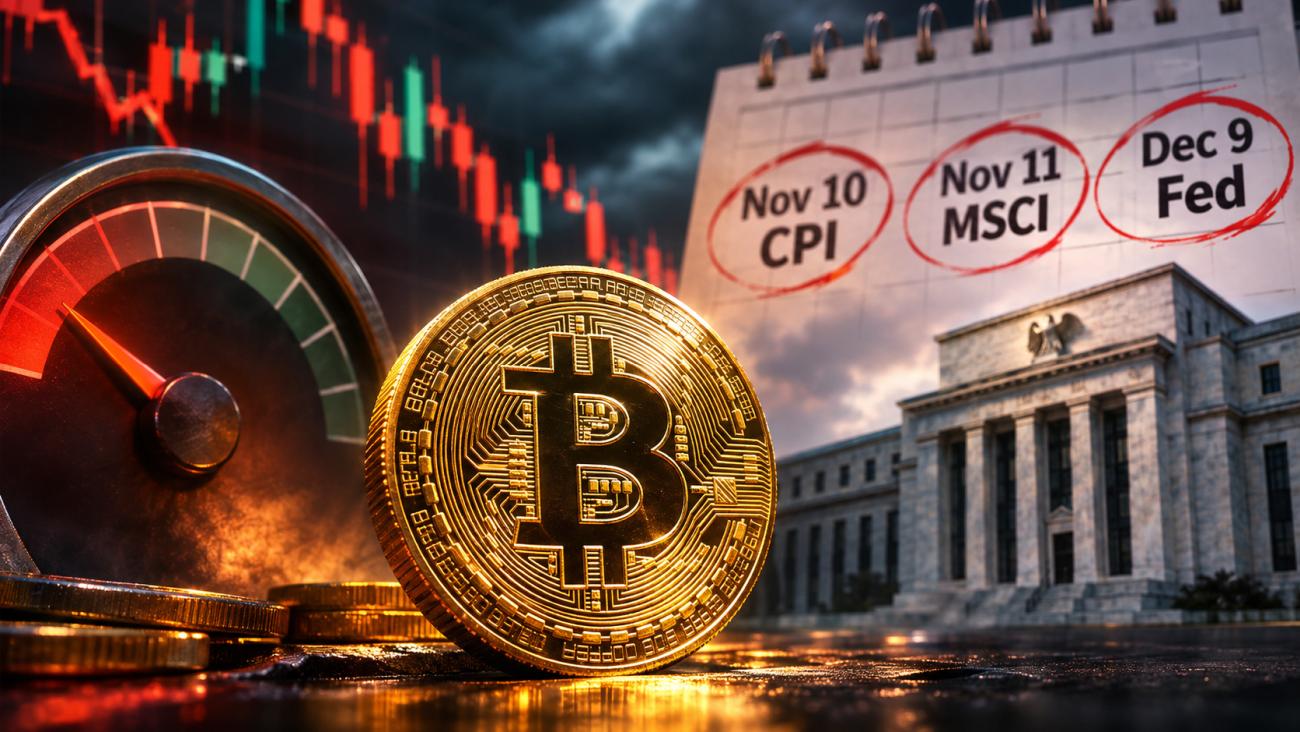
On Saturday, the Crypto Fear & Greed Index slipped to 25, its first Extreme Fear reading since early August. Bitcoin was changing hands near $75,800, about 40% below its October 2025 record. Social feeds blamed one culprit above all others: the $6.3 billion Binance heist.
We dug into the theft itself, and the uncomfortable questions it raises about who really controls your coins, in our breakdown of the Binance heist and its trust problem. Those questions still stand. This piece sets them aside and asks a narrower question that matters more for anyone holding or buying Bitcoin over the next few weeks: what is actually driving the price, and what comes next?
The short answer is that the hack is a sideshow for price. The real drivers are a jumpy derivatives market, an underwater cohort of recent buyers, and a calendar packed with macro events that could swing Bitcoin in either direction.
Start with the evidence that the exchange itself is not the problem. Binance said it would carry the loss on its own books and, within days, reported having replaced around 90% of the stolen assets. When withdrawals reopened on November 1, customers took out a net $3.64 billion in the first nine and a half hours. Against the $171 billion in its October 28 proof of reserves, that is roughly 2.1%.
A run that drains a fiftieth of an exchange’s reserves is not a run. Money moved, some of it sensibly into self-custody, and the plumbing held. Whatever you think about the deeper trust issues, the market is not trading this event as a solvency crisis, and it should not.
That means the selling pressure has to be coming from somewhere else.
The first clue is the gap between how traders feel and what the chart shows. Over the two days to Saturday, the Fear & Greed Index halved, falling from 50 to 25. Bitcoin, meanwhile, gave up only around 6% from Thursday’s high.
When mood deteriorates twice as fast as price, it often means positioning has become one-sided. Derivatives data points the same way. On-chain trackers reported this week that large accounts on Hyperliquid held close to twice as much in Bitcoin shorts as in longs, the heaviest bearish tilt in that group since October 2025. Funding rates on major venues were sitting close to zero, so leveraged traders were no longer paying a premium to stay long.
On paper, that is a classic contrarian setup. Fear is high, the crowd is leaning short, and shorts eventually have to buy back.
Before treating that as a buy signal, look at how often this market has been here before.
A twelve-month review of the Fear & Greed Index found it at 25 or lower on 182 days out of 365. Extreme Fear has been Bitcoin’s resting state roughly half the time. Thirty days after those readings, the price was higher in 62% of cases, but the typical gain was a modest 2%, and several signals were followed by drops of around a fifth within a month.
That is a thin edge with a lot of pain attached. An alarm that rings every second day tells you the market is nervous. It does not tell you the market has bottomed.
We have also already seen what crowded shorts can do, and how quickly the effect faded.
On election night, Bitcoin climbed from about $75,600 to above $81,000 and forced out $378 million in short positions in roughly an hour. Within a day it was back below $80,000. Open interest barely changed during the spike, which tells you the rally was driven by shorts being liquidated rather than by fresh buyers arriving.
The same report cited Glassnode data showing that only about 38% of the Bitcoin held by newer buyers was in profit, compared with almost all of it at the start of October. Those buyers are sitting on losses, and many will be tempted to sell as soon as the price returns to where they got in. That creates a ceiling of supply just above the current price.
Putting those pieces together gives a fairly clear map.
Overhead supply. The average cost basis of active investors sits around $77,700, with the 100-day moving average close by near $77,060. Above that is last week’s high just over $81,100. Each of those is a zone where trapped buyers may sell.
The squeeze target. Glassnode has flagged a cluster of short liquidations near $87,000. If Bitcoin can push through the overhead supply, that cluster could act like a magnet and fuel a second, larger squeeze.
The floor. Friday’s low of about $74,700 is the first support. Below that, the 200-day moving average near $73,200 is the level longer-term holders will be watching. A clean break there would shift the conversation from “oversold bounce” to “deeper correction.”
Positioning sets up the move. Catalysts decide its direction. Three are lined up in quick succession, and none of them has anything to do with Binance.
October CPI, Tuesday, November 10. This is the last inflation reading before the Federal Reserve’s December decision. After a stronger October jobs report, futures markets are pricing a 76.8% chance of a quarter-point rate hike on December 9, up from about 67% a week earlier. The Fed held at 3.75% to 4.00% in October, with two members already voting to hike. A hot CPI print would likely lock in that hike and pressure every speculative asset. A soft one could be exactly the trigger the crowded shorts are vulnerable to.
MSCI index review, Wednesday, November 11. MSCI has adopted new rules that exclude non-operating companies from its global indexes, and Strategy and Metaplanet both fail the screen in its simulation. The final list is due on November 11, with changes taking effect after the close on November 30. Estimates in circulation put forced passive selling of Strategy shares at around $2 billion. That would not directly force Bitcoin sales, but it would hit the largest corporate buyer of Bitcoin and dent a key source of demand.
The Fed decision, December 9. Everything above feeds into this meeting. Higher rates make cash and bonds more competitive and drain liquidity from risk assets. Bitcoin has traded as a high-beta risk asset for most of this cycle, and there is little reason to expect that to change in a matter of weeks.
Beyond the dated catalysts, two pressures are building in the background.
The first is ETF flows. Spot Bitcoin ETFs lost about $1.28 billion over five trading days last week, with BlackRock’s IBIT accounting for most of it, and year-to-date flows have slipped back below zero. Institutional money leaving steadily is a more durable headwind than any single headline.
The second is the stolen coins themselves, the one part of the hack that does matter for price. The attacker is reported to still control more than 420,000 ETH and over 18,000 BTC, and the FBI expects those assets to be laundered through decentralised finance and swap services. A seller who needs to convert billions quickly does not care about price. That overhang is likely to weigh on Ether in particular for months.
None of this argues for going all in, and none of it argues for dumping everything either.
Stage, do not lump. With CPI, the MSCI list and the Fed meeting all landing within a month, anyone adding exposure can spread entries across those events instead of making one call ahead of them.
Use the levels. Buying into overhead supply in the high $70,000s is a different trade from buying near the 200-day average. Knowing where trapped sellers and forced buyers sit helps avoid chasing.
Size for violence in both directions. Crowded shorts can produce sharp spikes up, and underwater buyers can cap them just as quickly. Position sizes should assume 20% moves are routine.
Watch the flows, not the feeds. A turn in ETF flows from outflows to inflows would say more about the bottom than any sentiment gauge.
The Binance heist pushed sentiment into Extreme Fear, but it is not what will decide Bitcoin’s next move. The exchange absorbed the loss and kept running, and the market has treated it accordingly.
What will decide the next move is a hawkish Fed, a heavy run of macro dates, steady ETF outflows, and a crowded short trade sitting just below a wall of trapped buyers. That combination can produce a sharp squeeze or a deeper flush, and the catalysts arrive in the next three weeks. Fear is not a strategy. Watch Tuesday’s CPI, the November 11 MSCI list and the ETF tape, and let those tell you which way the crowd gets caught.
This article is for informational purposes only and does not constitute financial advice. Crypto assets are highly volatile and you can lose some or all of your investment.