Physical Address
304 North Cardinal St.
Dorchester Center, MA 02124
Physical Address
304 North Cardinal St.
Dorchester Center, MA 02124


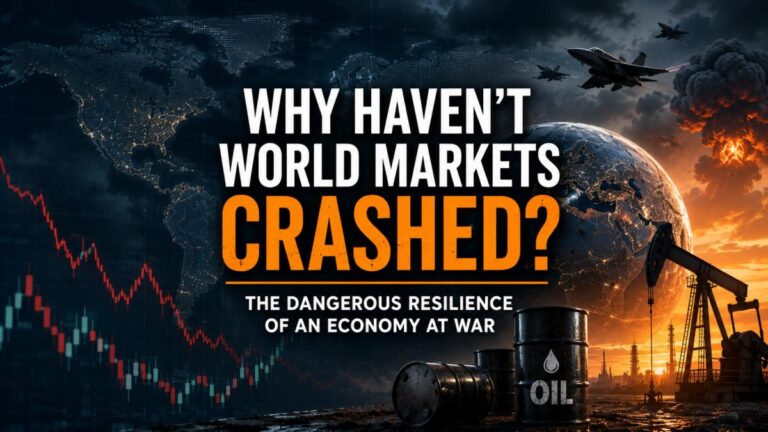
The Strait of Hormuz is effectively closed. Ships that once moved through the waterway at a rate of 130 per day had dropped to around six transits per day by March, a collapse of roughly 95 percent, according to UNCTAD's rapid economic assessment. That single bottleneck carries about a fifth of the world's daily oil consumption, a similar share of global LNG trade, and — a fact most news anchors have glossed over — somewhere between 30 and 45 percent of global fertiliser exports. Energy analyst Gary Stevenson returned to YouTube recently after a six-month absence making a documentary, and his first video back was not a gentle reintroduction. It was a systematic dismantling of everything you think you know about protecting yourself from an energy price crisis. This article unpacks the core argument and adds the data to back it up.
The Strait of Hormuz is effectively closed. Ships that once moved through the waterway at a rate of 130 per day had dropped to around six transits per day by March, a collapse of roughly 95 percent, according to UNCTAD’s rapid economic assessment. That single bottleneck carries about a fifth of the world’s daily oil consumption, a similar share of global LNG trade, and — a fact most news anchors have glossed over — somewhere between 30 and 45 percent of global fertiliser exports. Energy analyst Gary Stevenson returned to YouTube recently after a six-month absence making a documentary, and his first video back was not a gentle reintroduction. It was a systematic dismantling of everything you think you know about protecting yourself from an energy price crisis. This article unpacks the core argument and adds the data to back it up.
The most immediate economic consequence is an energy shock. Brent crude prices jumped sharply in the early days of the crisis, with some analysts at Barclays and Goldman Sachs warning of prices reaching $100 per barrel or higher if the disruption extends past the first quarter of 2026. The Dallas Federal Reserve’s modelling puts the current supply shortfall at roughly 20 percent of global oil, making this three to five times larger than any previous geopolitical oil disruption in recorded history, including the Yom Kippur War shock of 1973.
But the energy price spike is only the beginning of the transmission mechanism. When fuel costs climb, so does the cost of producing, processing, and moving food. Fertiliser prices are already under severe strain because roughly 46 percent of global urea trade originates in the Gulf region, as does around a third of global seaborne ammonia. According to the World Economic Forum’s commodity impact analysis, the disruption extends to methanol, aluminium, sulfur, synthetic graphite for EV batteries, and monoethylene glycol used in textiles. This is not a narrow energy problem. It is a cost-of-living shock rippling through virtually every supply chain on earth.
For lower income households, the pain lands hardest. Energy and food make up a far larger proportion of spending for working families than for wealthy ones. A billionaire does not notice when the fuel price rises. A family trying to cover rent, groceries, and utility bills in the same week absolutely does.
Stevenson’s most pointed observation is that governments are likely to respond to this crisis by subsidising energy prices, and that this response, despite feeling like help, actually makes the structural problem considerably worse.
The parallel to draw here is COVID-19. When lockdowns hit, Western governments responded by borrowing or printing enormous sums to replace lost income. The immediate suffering was cushioned. But the money went mostly through households and straight to landlords, energy providers, and asset-owning businesses. Government balance sheets took catastrophic losses. Private wealth ballooned. What followed was the inflation surge of 2022 and 2023, the housing affordability collapse, and a UK government now so constrained by borrowing costs that meaningful fiscal intervention is becoming close to impossible.
The UK government’s 10-year borrowing rate sat at roughly 4.2 percent just a month before the Hormuz crisis escalated. It has since risen to just under 5 percent. When you factor in the UK’s formula for calculating fiscal headroom, those higher rates mean the government likely cannot deploy the kind of energy subsidy package it offered after Russia invaded Ukraine. The position is structurally similar across most Western economies, though the UK is furthest along on the trajectory of depleted government wealth.
This trajectory is not an accident. Economists Thomas Piketty and Gabriel Zucman have documented the long-term collapse in net government wealth across Western nations through their World Inequality Database work. For decades, every major crisis has been managed by transferring wealth from government balance sheets to private ones. The asset pool available to governments to cushion the next shock keeps shrinking. What Stevenson calls the basic systemic playbook is now producing a very predictable outcome: less government firepower, more private enrichment, and no structural change to the underlying dynamic.
One of the more seductive ideas circulating in policy circles is that energy independence through domestic production solves the vulnerability problem. Invest in local oil and gas, the argument goes, and your citizens are insulated from events in the Persian Gulf.
The United States is the world’s largest oil producer. It got there through an extraordinary expansion of fracking technology over the past two decades. And yet American consumers are paying more at the pump and facing higher energy costs as a direct result of the Hormuz closure. The reason is not complicated. Domestic oil production in the United States is owned overwhelmingly by private corporations and institutional investors, not by ordinary citizens or the government. When the oil price rises globally, American producers sell into that global market at the global price. The oil may come from Texas or North Dakota, but the profits flow to asset holders, not to the people living near the wells.
The Atlantic Council’s analysis of 15 commodity impact charts makes the structural point visually: wealthier nations will outbid competitors in commodities markets and secure supply at a premium, while middle-income populations absorb costs through reduced consumption. The most vulnerable simply go without. Domestic production capacity shifts the location of the oil, not the distribution of the profit from it.
Here is where Stevenson’s argument cuts through to something most financial commentators will not say plainly. He entered the Hormuz crisis already holding hundreds of thousands of pounds worth of oil exposure, not through any specialist knowledge of commodities or geopolitics, but simply because wealthy people routinely hold broad, diversified portfolios of assets that include oil, agricultural futures, property, equities, and bonds. When one component spikes, the portfolio benefits.
This is not unique to Stevenson. It is the basic mechanics of wealth preservation at scale. Rich people own everything, so when the price of anything goes up, they tend to win. The people who do not own assets are exposed to the price rise with no corresponding gain on the other side of the ledger.
Inequality.org’s most recent data puts the situation in stark terms: the wealthiest 1 percent of Americans collectively held around $55 trillion in assets in the third quarter of 2025, roughly matching the total wealth held by the bottom 90 percent combined. The wealthiest 1 percent also own more than half of all stocks and mutual funds. When markets price in geopolitical risk and commodity exposure climbs, the wealth gains are not distributed equally. They accrue almost entirely to those who already hold the assets.
This is not a coincidence or the result of anyone’s superior judgment. It is the mechanical consequence of wealth concentration. Ownership of resources is protection against price rises in those resources. The more concentrated that ownership becomes, the narrower the group of people actually protected when a crisis hits.
Stevenson raises an argument that he acknowledges makes him uncomfortable but which the evidence increasingly supports. When wealth inequality becomes extreme enough, the economic incentives for conflict change. People become cheap relative to assets. Asset-owning elites develop the means to build and command private power structures. The historical pattern, from medieval feudalism through to 20th century imperialism, is that concentrated wealth tends to find military expression eventually.
The 2022 World Inequality Report, produced by Piketty, Emmanuel Saez, and Gabriel Zucman, found that global wealth inequality had returned to levels comparable to the peak of Western imperialism in the early 20th century. The bottom half of the global population owns 2 percent of global wealth. The top 10 percent owns 76 percent. These are not numbers that produce stable societies.
Stevenson’s Oxford thesis, written between 2017 and 2019, modelled the relationship between wealth inequality and asset prices, showing that when the wealthy accumulate at rates faster than the economy grows, asset prices structurally inflate while wages structurally decline. People become cheaper. Assets become more expensive. The incentive structure for conflict does not require anyone to be consciously malicious. It emerges from the arithmetic of compound wealth accumulation in a low-growth environment.
Governments that have spent the last forty years selling public assets, cutting top marginal tax rates, and borrowing from the wealthy to fund crises have arrived at the logical endpoint of that strategy. The assets are largely gone. The borrowing capacity is constrained by markets watching debt servicing costs. The ability to protect citizens from the next shock has been hollowed out.
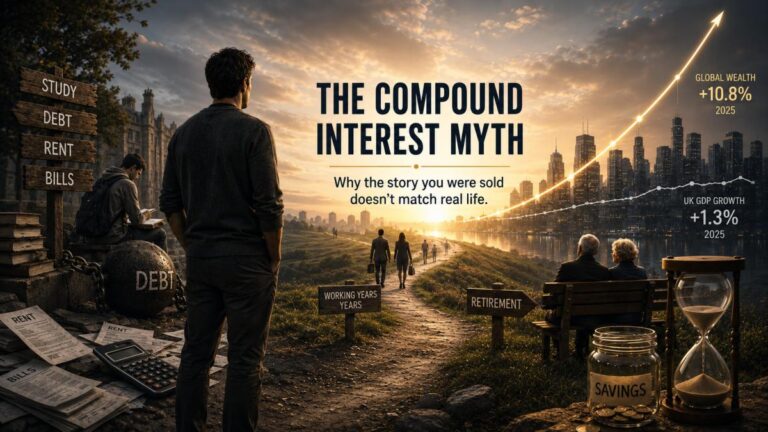
Pew Research’s long-term tracking of income and wealth inequality documents how systematically the wealth gap has widened since 1989. The ratio of wealth held by the richest 5 percent of families relative to those in the second income quintile more than doubled between 1989 and 2016, from 114 times to 248 times. Upper income families were the only group to grow wealth from 2001 to 2016. Everyone else either stagnated or lost ground.
The only mechanism that reverses this trend without waiting for a war or a depression to destroy asset values is a progressive wealth tax applied to the accumulation of very large fortunes. Not income tax. Not national insurance. A tax on the stock of wealth held above a meaningful threshold, applied consistently and with genuine enforcement. Stevenson proposes rates targeting wealth above 10 million pounds specifically because at that level you are no longer taxing people who worked hard and saved well. You are taxing compounding capital that reproduces itself automatically regardless of any productive contribution.
For more on how Gary Stevenson’s squeeze-out thesis explains the mechanism by which working and middle class wealth has been systematically transferred upward over the past five decades, see our earlier breakdown: The Squeeze: Why the Middle Class Is Losing the Wealth War.
The contrarian reality of the Hormuz crisis is this: the playbook of government subsidies, domestic production mandates, and emergency interest rate adjustments does not solve the underlying problem and may make it worse over the medium term by further depleting government fiscal capacity and funnelling crisis spending toward asset owners.
For investors willing to think structurally rather than reactively, the crisis confirms several theses that have been building for years. Real assets outperform during supply shocks. Commodity exposure is not speculative; it is defensive for those who can access it. Governments that entered this period with high debt, high borrowing costs, and limited fiscal headroom will struggle to suppress inflation effectively, which means nominal asset prices in hard resources and energy-adjacent sectors have room to continue rising even as real wages in energy-importing economies stay under pressure.
The harder truth is that the best hedge against crises like this one is broad ownership of productive assets built up well before the crisis hits. That is not advice that helps the majority of people who are watching energy bills rise while their government explains it has limited capacity to help. For them, the political argument for wealth redistribution is not ideology. It is the only practical path back to the kind of resilience that well-distributed ownership of resources used to provide.
The content on MarketMindInvestor.com is for informational and educational purposes only and does not constitute financial advice. Always consult a qualified financial advisor before making investment decisions.