Physical Address
304 North Cardinal St.
Dorchester Center, MA 02124
Physical Address
304 North Cardinal St.
Dorchester Center, MA 02124

Take, for example, 2017. That was the year Bitcoin went on a legendary run, climbing from $1,000 in January to nearly $20,000 by December. If you’d bought in at the start of the year, you probably felt like a financial genius by Christmas. But in early 2018
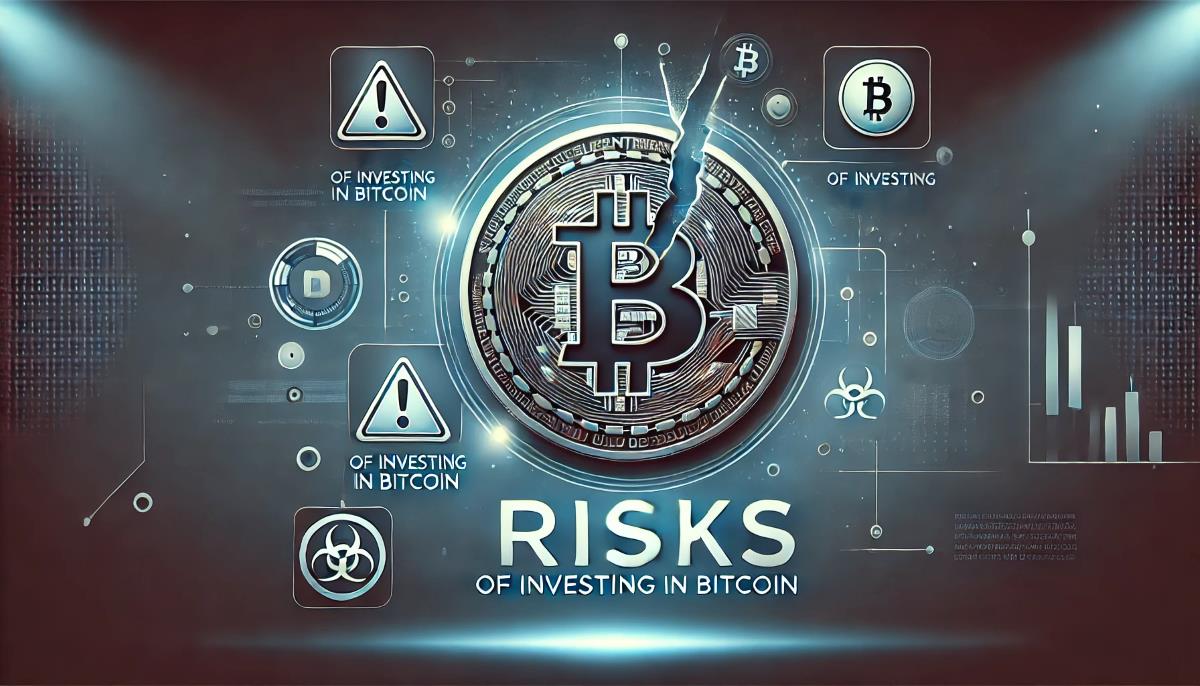
If you’ve been anywhere near the internet recently, you’ve probably heard whispers—or more likely, shouts—about Bitcoin. It’s been hailed as everything from the future of money to a “get-rich-quick” scheme gone wrong. For newbie investors, the promise of Bitcoin’s skyrocketing returns can be as tempting as that last slice of pizza on the table—just sitting there, waiting to be taken. But before you dive in headfirst, it’s crucial to understand that with Bitcoin’s potential reward comes some hefty risks.
Now, don’t get me wrong—Bitcoin can be exciting, kind of like riding a rollercoaster at an amusement park. But remember, not everyone loves rollercoasters. Some of us like to keep our feet firmly on the ground, and that’s okay too. If you’re new to investing, the idea of losing a chunk of your hard-earned savings because of a sudden market drop can feel more like being flung into a loop-de-loop you weren’t ready for than a thrilling experience.
In this article, I’m going to walk you through the main risks of investing in Bitcoin. We’ll talk about things like why Bitcoin prices sometimes seem to go up and down more often than a seesaw on a playground, and why securing your Bitcoin isn’t as simple as locking it in a bank vault. The goal? By the time you’re done reading, you’ll have a clearer sense of whether this wild ride is really for you—or whether it’s better to stick with something a bit more grounded.
So, buckle up and let’s get started.
Let’s start with the obvious: Bitcoin is volatile. And when I say volatile, I don’t mean the kind of mild, rainy day unpredictability where you’re not sure if you should bring an umbrella. No, we’re talking about full-blown, blink-and-the-price-could-drop-30%-or-shoot-up-to-the-moon unpredictability. Think of it like this: Imagine you bought a house, but instead of your home steadily appreciating in value, like most real estate does, the value of your house changed every day—sometimes every hour. One day it’s worth a million dollars, the next day it’s worth half that, and by Friday? Who knows!
For a newbie investor, this kind of volatility can be thrilling—or terrifying. Take, for example, 2017. That was the year Bitcoin went on a legendary run, climbing from $1,000 in January to nearly $20,000 by December. If you’d bought in at the start of the year, you probably felt like a financial genius by Christmas. But in early 2018, the price of Bitcoin crashed by more than 50% in a matter of weeks. If you were one of the unlucky ones who jumped in at the peak, that holiday bonus you thought you scored probably disappeared faster than leftover pie after Thanksgiving dinner.
I remember speaking with a friend who jumped on the Bitcoin bandwagon during that crazy 2017 run. Let’s call him Mike. Now, Mike’s not a professional investor by any means—he works in marketing, and like many, he got caught up in the Bitcoin frenzy after hearing about it on the news. “It’s the future!” he said, eyes gleaming with optimism. But when the crash came, Mike’s excitement quickly turned into panic. One minute, he was riding the wave; the next, he was scrambling to sell before losing even more. He learned a hard lesson about volatility: what goes up very fast can come down just as quickly.
So, why does Bitcoin’s price behave this way? A few reasons. First, it’s still a relatively young asset compared to stocks or bonds, meaning the market is less stable. Also, because it’s a speculative asset (people are betting on its future value rather than using it today), it’s heavily influenced by hype, news, and even tweets from famous tech billionaires. One big news story, and suddenly everyone’s buying or selling like there’s no tomorrow. The result? Prices move in ways that can make even seasoned investors feel seasick.
For a new investor, this volatility can make it hard to stick with a long-term strategy. When prices are swinging wildly, the temptation to sell when things go south—or buy when prices soar—can be overwhelming. But here’s the thing: timing the market is tough. It’s like trying to catch a falling knife—you might end up hurt.
Takeaway: If the idea of watching your investment value swing up and down like a yo-yo stresses you out, Bitcoin might not be the right move. There’s nothing wrong with wanting a little more predictability in your financial life. After all, investing is about building wealth over time, not gambling it away.
Picture this: it’s the 1800s, and you’re standing in a dusty frontier town. There’s no sheriff, no rules, just a bunch of people doing their own thing, hoping they don’t get swindled by the next fast-talking stranger rolling into town. Welcome to the world of Bitcoin—at least, that’s what it can feel like sometimes.
Unlike traditional investments like stocks or bonds, which are regulated by governments and financial authorities, Bitcoin exists in a space that’s still largely unregulated. It’s like the Wild West, where anything can happen, and there’s no central authority to step in when things go wrong. This lack of oversight can create some serious risks for new investors who are just learning the ropes.
Let me tell you a quick story. A few years ago, a friend of mine—let’s call her Sarah—decided to invest in Bitcoin after reading about it online. Sarah wasn’t too familiar with how cryptocurrencies worked, but she was excited by the idea of being part of this revolutionary new technology. She found a flashy website that promised her an easy way to buy Bitcoin, so she transferred her money, excited to see her investment grow.
Here’s where things went sideways. The site was a scam. Her money? Gone. Poof. Just like that. There was no customer service to call, no regulatory body to report the fraud to—nothing. Sarah had walked straight into a classic crypto con, and without any form of regulation to protect her, there wasn’t much she could do except learn an expensive lesson.
This brings us to the heart of the issue: Bitcoin’s decentralized nature means there’s no government or central authority to monitor transactions or enforce investor protections. On one hand, this is part of what makes Bitcoin attractive—no middlemen, no banks—but on the other, it’s also what makes it dangerous. Without regulation, you’re more vulnerable to fraud, hacks, and scams. It’s up to you to vet the platforms you use and ensure you’re following best practices, which can be a lot to ask of a new investor.
Real Example: Take the infamous case of Mt. Gox, once the largest Bitcoin exchange in the world. In 2014, Mt. Gox filed for bankruptcy after hackers stole nearly 850,000 bitcoins from the platform—worth hundreds of millions of dollars at the time. Investors lost everything, and because Bitcoin isn’t regulated like traditional financial markets, they had little recourse for getting their money back.
Audience View: As a new investor, ask yourself: Are you comfortable operating in a financial environment without the safety net of government regulation? If something goes wrong, who will help you? If the answer to these questions leaves you feeling uneasy, you’re not alone. Many new investors prefer the security that comes with more traditional, regulated markets.
Takeaway: The lack of regulation in Bitcoin is a double-edged sword. While it offers freedom and innovation, it also exposes investors to higher risks. Make sure you understand the risks before jumping in—and if you’re unsure, it’s okay to wait until the crypto space matures a bit more.
Okay, here’s a quick quiz: if I asked you to protect $10,000 in cash, how would you do it? Maybe you’d lock it in a safe, stash it under your mattress (old school, but effective), or deposit it in a bank. Now, what if I told you that protecting your Bitcoin is a lot more like carrying around a digital key that, if lost or stolen, could mean your Bitcoin is gone forever? Fun, right?
The security risks around Bitcoin aren’t just hypothetical—they’re very real, and they can catch newbie investors off guard if they’re not prepared. Unlike a traditional bank account, where you can reset your password or contact customer support if something goes wrong, Bitcoin transactions are irreversible. Once it’s gone, it’s gone. Period.
Let me give you a quick anecdote. I know a guy—let’s call him Joe. Joe bought a decent amount of Bitcoin a few years back, and he was smart about it. He didn’t keep his Bitcoin on an exchange (where it could be hacked), but instead, stored it on a hardware wallet—a little device that’s like a digital safe for cryptocurrencies. But here’s the kicker: Joe lost the seed phrase, the 24-word recovery password needed to access the wallet. Without it, his Bitcoin is essentially locked away forever. It’s sitting there, somewhere in cyberspace, unreachable.
This is one of the most common pitfalls for new Bitcoin investors. It’s not just about buying Bitcoin; it’s about knowing how to store it safely. There are two main ways to store Bitcoin: hot wallets (online, easy to access, but more vulnerable to hacking) and cold wallets (offline, much safer, but if you lose the access codes, your Bitcoin is gone). Each option has its risks, and knowing which one suits you best is crucial to keeping your investment safe.
Real Example: In 2021, a German programmer named Stefan Thomas made headlines when it was reported that he had two guesses left to unlock his Bitcoin wallet containing over $200 million. He had lost the password to his wallet, and after eight failed attempts, he was facing the very real possibility of losing his fortune forever. It’s a cautionary tale for anyone thinking of diving into Bitcoin without fully understanding how security works.
Audience View: You might be thinking, “Wait, I’m not great with passwords. What happens if I forget mine?” That’s a valid concern! Unlike your Netflix account, there’s no “Forgot Password” option with Bitcoin. For new investors who aren’t tech-savvy, managing the security of digital assets can feel daunting.
Takeaway: Bitcoin’s digital nature is both its strength and its weakness. While it offers convenience and control, it also puts the burden of security squarely on your shoulders. If you’re not confident in your ability to manage passwords, secure wallets, and avoid phishing scams, Bitcoin may feel like more trouble than it’s worth.
Imagine you’re sitting at a poker table. You’ve got your chips in front of you, feeling pretty good about your hand. But then, in walks a high roller—a “whale,” if you will—who casually tosses a stack of chips onto the table that’s bigger than everything you’ve got combined. Suddenly, the game changes. That’s what it can feel like investing in Bitcoin when whales are involved.
In the world of cryptocurrencies, a whale refers to someone who holds a massive amount of Bitcoin—so much, in fact, that a single move they make can shake up the entire market. Unlike traditional financial markets, where large trades are more tightly regulated, Bitcoin operates without the same safeguards, allowing large holders to influence prices dramatically. They can create massive swings by selling or buying a large portion of their holdings, leaving small, everyday investors to feel like they’re constantly swimming against the tide.
Now, let’s talk about pump-and-dump schemes. No, this isn’t a new workout routine; it’s a dirty trick used to manipulate the market. Here’s how it works: a group of investors (or even a single whale) will artificially pump up the price of a cryptocurrency by creating hype, usually through online forums, social media, or news outlets. They buy in, driving the price up, and just as everyday investors jump in, thinking they’re about to ride the wave, the manipulators sell off their holdings (the “dump”), causing the price to plummet. New investors are left holding the bag, wondering what just happened.
Here’s an example: During the Bitcoin surge of 2017, there were countless stories of inexperienced investors getting burned by these schemes. A coin that seems to be rocketing upward suddenly crashes to the ground, and without warning, all the gains evaporate. One day, you’re on top of the world, and the next, you’re wondering where it all went.
Audience View: For a new investor, ask yourself: “How would I feel if I lost my investment because someone else manipulated the market?” The answer is probably not great. Many newbie investors don’t have the tools or knowledge to spot these schemes until it’s too late, which can leave them vulnerable in a market that sometimes feels like the Wild West.
Takeaway: While it’s exciting to imagine riding the wave of a skyrocketing cryptocurrency, the reality is that the market can be manipulated, often to the detriment of smaller investors. If you’re new to Bitcoin, it’s essential to recognize that you might not always be playing on a level field.
So you’ve bought Bitcoin. Maybe you’re sitting on a decent gain, and things are looking good. But what happens if, all of a sudden, your government decides Bitcoin isn’t legal anymore? It sounds far-fetched, but this kind of thing has already happened in some parts of the world.
Bitcoin operates in a bit of a legal gray area. In some countries, like the U.S., it’s seen as property and taxed accordingly. In others, it’s banned outright. In 2021, China—one of the world’s biggest markets for cryptocurrency—cracked down on Bitcoin mining and transactions, effectively making it illegal for citizens to participate in the crypto space. Overnight, Chinese Bitcoin miners were forced to shut down operations, and traders scrambled to figure out what to do with their holdings. The result? A sudden dip in Bitcoin’s global price and a lot of panic selling.
What does this mean for you, the newbie investor? Well, it means you need to keep an eye on regulations in your own country and consider how future legal changes might impact your investment. It’s one thing to take on the inherent risks of a volatile asset, but it’s another to wake up one morning and realize you can no longer legally trade it.
Real Example: Consider India, where for a time, the government was flip-flopping on its stance regarding cryptocurrency. One day, it looked like they were going to ban Bitcoin; the next, they seemed to soften their stance. Investors were left in a state of uncertainty, not knowing if they were risking more than just their money—they could be breaking the law.
Audience View: Ask yourself, “What would I do if my government suddenly banned Bitcoin?” If you’re someone who prefers to stay on the right side of the law, these regulatory uncertainties could make investing in Bitcoin feel more like a gamble than a smart financial decision.
Takeaway: Legal risks can feel abstract until they suddenly aren’t. As a new investor, it’s important to stay informed about how governments are treating Bitcoin, both in your country and globally. Future regulations could dramatically change the landscape, affecting your ability to trade, store, or even hold Bitcoin.
Investing in Bitcoin can be a wild ride, and for new investors, it’s important to know that while the rewards might be tantalizing, the risks are equally real. From its infamous volatility to the unregulated landscape where scams and manipulation lurk, Bitcoin isn’t your average investment. Add in security concerns, the possibility of losing your entire investment if you forget a password, and the looming specter of regulatory changes, and suddenly, Bitcoin looks less like a shiny new toy and more like a double-edged sword.
But here’s the thing: understanding these risks is the first step toward making an informed decision. If you’re comfortable with the roller-coaster nature of Bitcoin’s price, willing to take extra precautions to protect your investment, and ready to stay informed about legal developments, Bitcoin could be a worthwhile addition to your portfolio. If not, that’s okay too. There are plenty of more stable, traditional investments out there that can help you build wealth over time without the heart-pounding drama of cryptocurrency.
In the end, whether you choose to invest in Bitcoin or not comes down to your risk tolerance and your understanding of the market. The more informed you are, the better your chances of weathering the ups and downs of this unpredictable but fascinating asset class. Remember, it’s okay to be cautious. After all, the best investors aren’t the ones who take the biggest risks—they’re the ones who take the smartest ones.
So, are you ready to ride the Bitcoin rollercoaster, or would you rather keep your feet on solid ground? The choice is yours.