Physical Address
304 North Cardinal St.
Dorchester Center, MA 02124
Physical Address
304 North Cardinal St.
Dorchester Center, MA 02124



The line between financial markets and information platforms is dissolving faster than most investors realize. What started as a niche blockchain experiment for political junkies has quietly become one of the most watched data feeds on Wall Street. Polymarket, the blockchain-based prediction market platform, processed over $22 billion in notional trading volume throughout 2025 alone, and the parent company of the New York Stock Exchange has placed a $2 billion bet that this is only the beginning.
The stocks of the world's largest alternative asset managers have spent much of early 2026 in freefall. Blackstone, KKR, Apollo, Ares, Carlyle, and Blue Owl have each lost between 12% and 31% since the year began. For an industry that spent the past decade presenting itself as the sophisticated investor's answer to a low-yield world, the optics are brutal. But for the contrarian investor paying attention, this is not a surprise. It is a reckoning that was baked into the model all along.

The Middle East is burning, and energy stocks are surging. The XLE ETF is up 26% year-to-date, Brent crude closed above $103 per barrel on Friday, and the International Energy Agency has just authorised the largest emergency oil release in history. For contrarian investors, the question is not whether energy is the trade of the moment. It obviously is. The real question is whether you are buying into a structural shift or chasing the tail end of a geopolitical panic premium that could evaporate overnight.
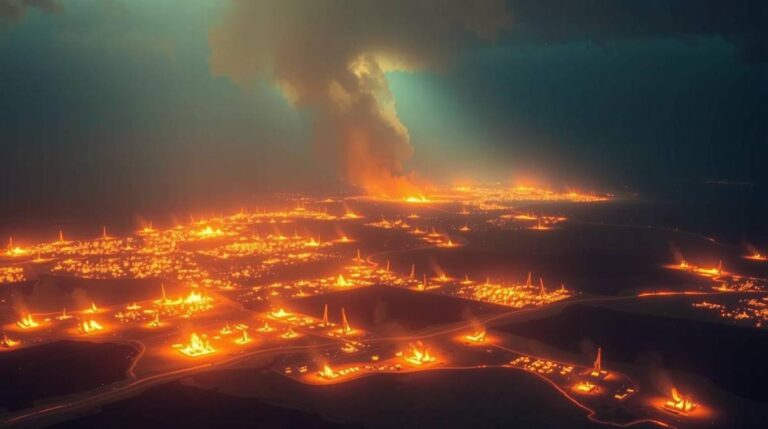
The news coming out of the Persian Gulf over the past two weeks has been unlike anything energy markets have seen since the 1973 oil embargo. Refineries in Saudi Arabia, Kuwait, Qatar, the UAE and Bahrain are either burning, shuttered or operating at dramatically reduced capacity. The world's largest LNG export facility at Ras Laffan in Qatar has gone dark. The Strait of Hormuz, through which approximately 20% of the world's seaborne oil and the bulk of Qatari gas flows, is effectively closed to normal maritime traffic. Oil is pushing toward $93 a barrel. European gas prices have surged to four-year highs.

For most investors alive today, economic growth has been the default assumption. Markets go up over time. GDP expands. Industrial output climbs. These are the axioms baked into every portfolio model, every retirement calculator, and every financial plan. But what happens when that assumption breaks? What happens when growth runs in reverse, and advanced economies begin an involuntary process of de-industrialization? That question, once considered the territory of fringe economists and doomsday preppers, is rapidly becoming a mainstream concern.
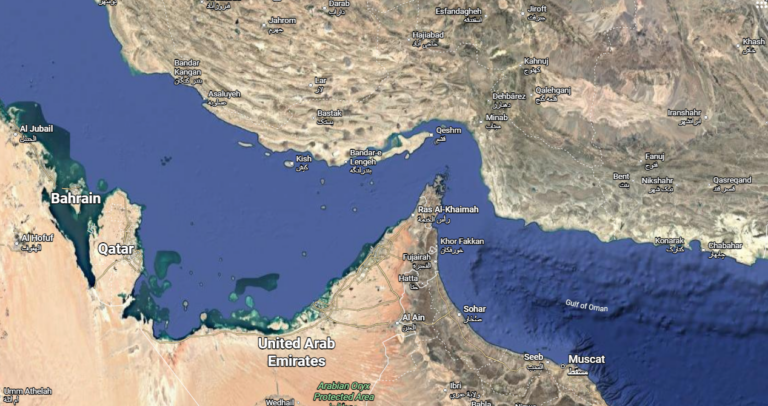
In a recent YouTube analysis, Prof Jiang Xueqin laid out one of the more sobering geopolitical frameworks doing the rounds right now. Using nothing more than a map and a steady voice, he walked viewers through why the ongoing Iran-US confrontation is not a regional skirmish but a structural challenge to the entire post-war global economic order. For investors, the implications go well beyond oil prices. We are potentially looking at a reconfiguration of trade flows, reserve currency dynamics, and equity valuations that most mainstream portfolios are completely unprepared for.

For most of the twentieth century, control over energy meant control over power. Not just the power to keep the lights on, but the kind of power that moved armies, swayed elections and determined which nations got to write the rules. That equation has always rested on a single, uncomfortable truth: the world's most critical fuel is buried unevenly beneath the earth, and getting it to where it is needed requires passing through a handful of narrow maritime corridors that a determined actor could, in theory, close.

Fidelity Investments has long been a titan in the world of investment platforms — but 2026 marks a genuinely transformative chapter for the firm. From launching its own stablecoin to expanding its spot crypto ETF lineup, Fidelity is no longer just a retirement and mutual fund powerhouse. It's rapidly becoming a full-stack financial institution for the digital age. Whether you're a first-time investor, a seasoned trader, or someone navigating retirement, this comprehensive 2026 review breaks down everything you need to know about Fidelity's top features, notable drawbacks, and closest competitors.

There is a financial truth that does not get discussed enough in mainstream personal finance circles: the same credit card that locks one person into a 22% interest spiral is generating thousands of dollars in rewards, free travel, and risk-free yield for another. The difference is not income. It is not privilege. It is simply knowing the rules of the game.

A day ago, we mapped out four oil disruption scenarios that could unfold if military hostilities resumed between the United States, Israel, and Iran. At the time, markets were treating the situation as elevated but manageable background noise. Brent crude was nudging higher, diplomats were still talking, and most portfolio managers were keeping their hedges light.
That changed on Saturday.