Physical Address
304 North Cardinal St.
Dorchester Center, MA 02124
Physical Address
304 North Cardinal St.
Dorchester Center, MA 02124

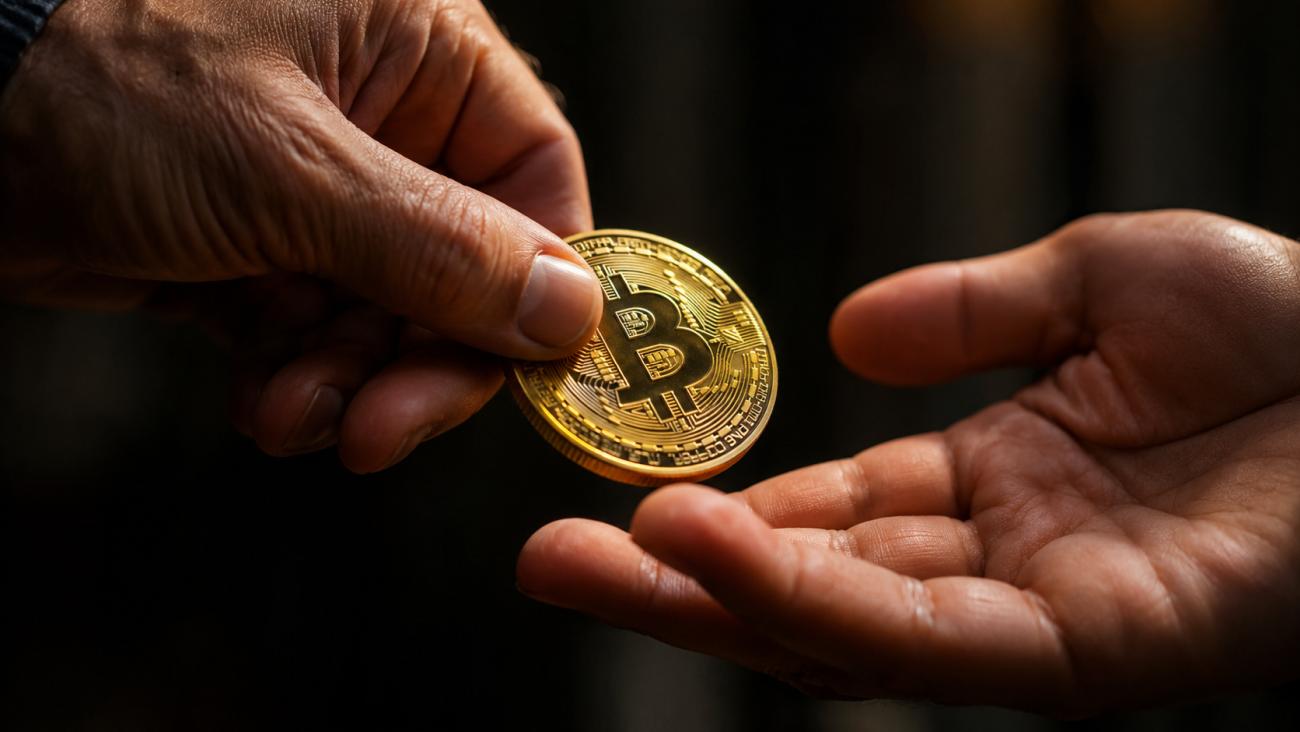
Much of Bitcoin's slide to $62,000 came from sellers who had no choice: ETF redemptions, liquidated leverage and miners repaying debt to chase AI. Here is who sold, and who bought.
Bitcoin’s slide from late October into mid-November looked, on the chart, like a stampede for the exits. The price fell from a close of about $81,250 on 28 October to a low near $61,950 on 15 November, a drop of roughly a quarter in under three weeks. The natural assumption is that holders lost faith and dumped their coins.
The data tells a more interesting story. When you trace who actually sold, a large share of the supply came from sellers who were either following a corporate plan or had no choice at all. That distinction matters, because a market driven by forced selling behaves very differently from one driven by investors who have genuinely given up. It also says something about who will own Bitcoin when the dust settles.
The largest seller anyone can put a name to is not a mysterious whale or a government. It is MARA Holdings, one of the biggest listed Bitcoin miners. After its third quarter closed, MARA sold 13,597 coins for roughly $1.1 billion, at an average of about $81,000 per coin, according to its own filings.
The reason was debt. In August the company had borrowed $750 million against its Bitcoin to help fund a power acquisition, leaving a large slice of its treasury pledged as collateral. MARA used the sale proceeds to repay those loans in full, releasing more than 17,000 pledged coins and cutting the share of its holdings tied up as collateral to almost nothing. There was money left over, and the company kept selling after its results were published.
This was a deliberate balance sheet decision, not a panic. MARA chose its timing, sold well above the eventual low, and removed the risk of a margin call forcing it to sell at worse prices later. From a corporate finance view it was arguably sensible. From a market view it added a large, steady stream of supply at exactly the wrong moment for the price.
The more important question is why a company that produces Bitcoin for a living would want to hold less of it. The answer is that a miner’s most valuable asset was never its coin stash. It is the electricity it has secured.
A megawatt of grid capacity can run mining rigs or it can run servers for artificial intelligence workloads, and right now AI tenants pay more for that power. MARA is putting its cash into a gas-fired plant in Ohio called Long Ridge, rated at roughly 485 megawatts, in a deal valued at about $1.5 billion. No AI tenant has been named for the site yet, so the company is securing the power first and hoping to find the customer second.
Others are further along. CleanSpark has signed a 20-year lease with a Meta subsidiary for a 175 megawatt campus in Georgia, worth around $6.6 billion over the initial term, although rent does not begin until late 2027. Bitfarms has gone furthest of all, rebranding as Keel and stepping away from its identity as a Bitcoin company altogether.
The pattern is industry wide. Public companies, mostly miners, had sold well over 100,000 coins during 2026 by early November. For long-term investors, this is the structural point worth remembering: the sector that used to be a natural accumulator of Bitcoin is turning into a reliable source of supply as it chases AI revenue.
When prices drop this hard, the instinct is to blame a single giant holder. History suggests that is rarely how it works. In July 2025 Galaxy Digital handled the sale of more than 80,000 Bitcoin for one early investor, a block worth over $9 billion at the time. It was placed over the counter across several days and the market barely flinched.
That is what a seller with a choice looks like. Someone moving a fortune does it quietly, in pieces, through channels designed to avoid moving the price.
During this sell-off, the measurable activity from old, large holders was modest by comparison. Long-dormant whales booked about $295 million in realised profit on 10 November, their biggest profit-taking day of the year but a small fraction of that 2025 block. Headline figures showing tens of thousands of coins moving between large wallets include plenty of internal transfers, which are not sales at all.
So the question is not who chose to sell. It is who was obliged to sell, at whatever price the market offered, on the days the price was falling fastest.
Coin Bureau traced the sellers one by one in this video, and it is worth watching alongside the numbers above.
The most visible sellers were the spot Bitcoin ETFs that brought institutional money into the asset in the first place. Outflows ran for days on end in early November. BlackRock’s IBIT alone shed more than $1.2 billion in a single week, and it accounted for the large majority of net withdrawals across the category during the month.
An ETF does not have an opinion about Bitcoin. When shareholders redeem, the fund must deliver or sell the underlying coins, and it cannot wait for a better day. The same product that made buying Bitcoin effortless for pension funds and wealth managers makes leaving just as effortless, and those exits happen in real time.
Here is the detail that gives the game away. ETFs do not trade on weekends, yet the low of the move arrived on a weekend. On Saturday 14 November, roughly $1.8 billion of leveraged long positions were liquidated, the heaviest day of long liquidations since February. Bitcoin’s share of that wipeout was in the hundreds of millions of dollars, and it drove the price down toward $62,000.
Those traders did not decide to sell. Their exchanges closed their positions automatically once collateral fell below the required level. The contrast with MARA is stark. The miner picked its own days and averaged around $81,000 a coin. The leveraged longs were sold out near the bottom, close to $19,000 a coin lower. Both groups were holding Bitcoin against borrowed money. The difference was who got to choose the timing.
There is another forced seller on the calendar, although it involves shares rather than coins. Index provider MSCI is removing Strategy from its USA Index and Metaplanet from its Japan Small Cap Index at the close on 30 November. Funds that track those indexes must sell the stocks regardless of what their managers think about Bitcoin, and analysts have estimated billions of dollars of passive selling in Strategy alone.
It is important to keep this in proportion. Index funds will be selling Strategy’s equity, not its Bitcoin, and the company is under no obligation to sell coins as a result. Any knock-on effect would come through sentiment and Strategy’s ability to keep raising money to buy more, not through direct coin sales.
Some commentators have pointed to the run-up to Anthropic’s IPO, arguing that investors sold crypto to fund an allocation. The timing is suggestive, but the dates cannot separate that story from the jump in Treasury yields that happened in the same window, and no flow data links Bitcoin sales directly to the listing.
What can be measured is the cost of capital. The US 10-year yield has pushed above 5 percent, futures markets are pricing a December rate hike, and stablecoin supply has been shrinking, which means less fresh money is waiting on the sidelines to buy. That backdrop echoes the credit squeeze we explored in our look at Jeff Currie’s case for forced rate cuts. When the marginal buyer disappears, the price does not need a wave of selling to fall. It only needs buyers to step back.
Every coin sold had a buyer, and this is the part of the story that should interest contrarians most. Glassnode estimated that about 66,000 Bitcoin changed hands in the $62,000 to $66,000 range during the two heaviest days of selling. Someone was willing to absorb a very large amount of supply at the lowest prices of the entire move.
We do not know who those buyers were. We do know it was not mainly Strategy, the best-known corporate accumulator, which kept buying but in amounts that were small relative to that volume. Whoever stepped in acquired coins well below the average cost of many high-profile holders.
Three conclusions stand out. First, much of the selling was mechanical. ETF redemptions, margin calls and corporate debt repayments are not the same as long-term holders abandoning the asset, and they tend to exhaust themselves once leverage has been flushed out.
Second, the miner pivot is a structural headwind. As mining companies redirect power and capital toward AI, they are likely to remain net sellers of the coins they produce, and investors should treat that as a steady source of supply rather than a one-off event.
Third, ownership is shifting. Coins moved from leveraged traders and redemption-driven funds to buyers who were prepared to commit capital in a falling market. That kind of rotation has often preceded more stable holding patterns, though it is no guarantee of a quick recovery.
The risks remain real. If the $62,000 to $66,000 zone fails, the large block of recently purchased coins sitting there could become a source of fresh selling. Tighter monetary policy would also keep pressure on speculative assets. But for investors who look past the headline price, this sell-off looks less like a collapse in conviction and more like a transfer of coins from forced sellers to patient buyers.
This article is for information only and does not constitute financial advice.