Physical Address
304 North Cardinal St.
Dorchester Center, MA 02124
Physical Address
304 North Cardinal St.
Dorchester Center, MA 02124

A day ago, we mapped out four oil disruption scenarios that could unfold if military hostilities resumed between the United States, Israel, and Iran. At the time, markets were treating the situation as elevated but manageable background noise. Brent crude was nudging higher, diplomats were still talking, and most portfolio managers were keeping their hedges light.
That changed on Saturday.
A day ago, we mapped out four oil disruption scenarios that could unfold if military hostilities resumed between the United States, Israel, and Iran. At the time, markets were treating the situation as elevated but manageable background noise. Brent crude was nudging higher, diplomats were still talking, and most portfolio managers were keeping their hedges light.
That changed on Saturday.
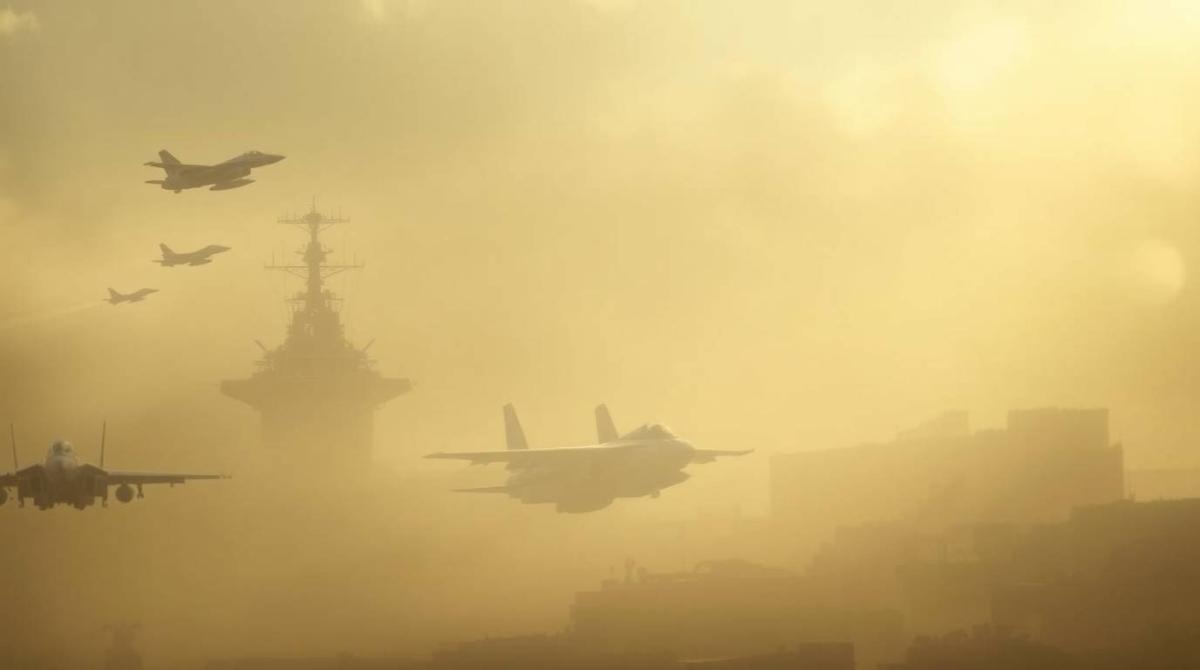
U.S. and Israeli forces launched strikes on Iran, targeting its leadership. Tehran responded within hours, firing missiles toward Israel. What had been a framework for thinking about tail risks is now a live, unfolding conflict with real missiles in the air and major trading houses already suspending crude shipments through the Strait of Hormuz. This is not a drill, and the window for getting positioned ahead of the market is closing fast.
The purpose of this piece is not to repeat the scenario mapping we covered in our earlier analysis on this site. The purpose is to translate what has already happened into specific, actionable market implications across asset classes, and to do it before the consensus catches up.
Brent crude closed Friday at around $73 per barrel, having already risen approximately 20% since the start of 2026. That was the pre-strike price. Some major oil companies and commodity trading houses suspended Hormuz shipments on Saturday itself, which means the physical disruption is already beginning even before a single tanker has been permanently damaged.
Capital Economics has framed this as a binary path. A contained conflict that does not materially affect supply could push Brent to around $80, broadly consistent with where it peaked during last June’s Twelve-Day War. A prolonged conflict that actually disrupts supply chains and Gulf export flows would push prices toward $100, and at that level you are looking at 0.6 to 0.7 percentage points of additional global inflation on top of everything tariffs are already doing to consumer prices.
What the $73 to $80 range the market is currently contemplating does not yet reflect is the scenario where Iran decides that this conflict is existential and reaches for the weapons it kept holstered last summer. As we outlined previously, Iran’s ability to mine the Strait, attack offshore loading terminals, or strike Arab Gulf energy infrastructure represents a risk of a magnitude that would take oil well above $100 and potentially beyond the $130 peak seen after Russia’s Ukraine invasion in 2022. Markets are not pricing that probability seriously yet. That is the contrarian opportunity.
The ICE Brent crude futures market will be the first and most liquid place where this gets repriced. Watch the curve structure as much as the spot price: a shift to steep backwardation as near-term physical tightness bites would signal that traders are treating this as a genuine supply event rather than a sentiment spike.
Currency markets are going to move in ways that catch a lot of retail investors off guard, because the intuitive trade and the correct trade are pointing in different directions.
The intuitive trade is to sell the dollar. Geopolitical chaos, American military engagement, uncertainty about escalation: all of that reads as dollar-negative to investors anchored in the post-2008 playbook. And yes, the dollar index did fall about 1% during last June’s conflict, as the Commonwealth Bank of Australia noted in its analysis of the situation.
The correct trade, if the conflict proves prolonged and supply is genuinely disrupted, is to buy the dollar. The United States is a net energy exporter. Higher oil and gas prices are a revenue positive for the American economy in a way they simply are not for energy-importing economies in Europe and Asia. In a world where Brent is at $100 and supply out of the Gulf is constrained, the U.S. is structurally advantaged. CBA analysts made exactly this point this week: a dollar rally would be the expected outcome in a persistent disruption scenario, with the exception of the Japanese yen and Swiss franc, which carry their own safe-haven dynamics.
The Swiss franc is already up 3% against the dollar in 2026 and faces further upward pressure. The Swiss National Bank will not be happy about this. Franc strength compresses Swiss export competitiveness and makes the SNB’s inflation management considerably more complicated. Watch for intervention signals.
The Israeli shekel is the wild card. It dropped 5% at the start of last June’s conflict but rebounded quickly. JPMorgan has flagged that this time could be different if the conflict proves more persistent and spreads to Iran’s proxy network across the region. A sustained shekel weakness scenario would reflect a broader reassessment of Israeli risk premia that the market has been slow to price on a structural basis.
Gold has already had an extraordinary run in 2026, up 22% before the strikes happened. The instinct of many investors at this point is to assume gold is overbought and that the move is played out. That thinking is almost certainly wrong. Gold performs not just as an inflation hedge but as a liquidity-of-last-resort asset when institutional confidence in other asset classes falters. A live Middle East war involving the United States, combined with ongoing tariff-driven economic disruption, is precisely the environment where gold’s run extends rather than reverses.
Silver deserves attention alongside gold. It carries the safe-haven premium in this environment but also has significant industrial demand exposure that plays into a commodity price surge across the board.
U.S. Treasuries are likely to see demand as well. Yields have been falling in recent weeks as growth concerns mounted, and a conflict-driven flight to safety accelerates that dynamic. For investors with equity-heavy portfolios, a modest allocation to longer-duration Treasuries as a portfolio hedge is worth considering.
The most important thing to note about safe havens right now is what is not on the list. Bitcoin has lost more than a quarter of its value over the past two months and fell a further 2% on Saturday. The narrative of bitcoin as a digital safe haven has been thoroughly dismantled in this cycle. If you are holding crypto in this environment as a hedge against geopolitical risk, the data is telling you clearly that this thesis is not holding. Repositioning away from that assumption into more conventional safe havens is not a controversial call at this point.
Defence is the obvious beneficiary and markets have already been pricing this in. European defence stocks are up 10% in 2026 before this weekend’s escalation. The direction of travel is not particularly contrarian at this point, but the magnitude of upside in a prolonged conflict scenario remains underappreciated by analysts still anchored to pre-war budget assumptions. The European defence sector index will bear close watching when European markets open Monday morning.
Airlines are an immediate casualty. Global carriers cancelled Middle East flights on Saturday, and airspace closures in a prolonged conflict scenario would have meaningful revenue and cost impacts. Fuel hedging positions across the sector vary enormously, and the airlines that are most exposed on unhedged fuel costs in a $100 oil environment are the ones to avoid. The irony is that airline stocks often get sold indiscriminately in these events, creating entry points in well-hedged carriers after the initial panic.
The overlooked middle is the tanker and shipping logistics complex. When Hormuz gets complicated, freight rates and war-risk insurance premiums spike violently. Lloyd’s of London and the broader marine insurance market price this in real time, and the tanker operators who can still move product under elevated risk conditions command extraordinary pricing power. This was visible in 2019, in 2020, and during the Red Sea disruptions. The pattern is well established. The equities of major tanker operators are worth watching closely as this situation develops.
Petrochemicals, fertilisers, and food commodities are the second-order effects that the market prices in slowly. A sustained $100 oil environment flows through the entire supply chain of physical goods. The Food and Agriculture Organisation’s commodity price indices will start reflecting this within weeks if oil stays elevated. For investors with exposure to agricultural commodities or fertiliser producers, this is a tailwind that the market is not yet articulating clearly.
The VIX has risen by a third in 2026 and U.S. bond volatility is up 15%. Those are significant moves, but consider what the actual realised event is: a live military conflict involving the United States in the world’s most critical energy chokepoint, simultaneous with a global tariff war, an equity market that had already been rattled by a major tech selloff, and a geopolitical order that is being restructured in real time.
In that context, implied volatility is not expensive. It is arguably still cheap. Options strategies that benefit from further volatility expansion, particularly on oil-sensitive equities and on assets with high Middle East revenue exposure, deserve a fresh look before the market catches up to the reality of what Saturday has set in motion.
The honest answer is that nobody knows how this unfolds from here. That uncertainty is itself the investment thesis. Markets hate uncertainty more than they hate bad outcomes, and right now the range of plausible outcomes stretches from a contained and quickly negotiated ceasefire all the way to a regional war that disrupts global energy supply for months.
What we do know is that the pre-strike consensus was not positioned for the serious scenarios. Some of that re-positioning is happening right now, over a weekend, in thin liquidity conditions. The violent moves that follow when full market liquidity returns on Monday will reflect a market scrambling to catch up.
Being ahead of that scramble, even by a few days, is where the real money is made in geopolitical event trading. The framework for thinking about this is not complicated. It comes down to one question: how much of the serious disruption scenario is the market actually pricing? Right now, the answer is still not enough.
The views expressed here are for informational and educational purposes only and do not constitute financial advice. Always conduct your own due diligence before making investment decisions.