Physical Address
304 North Cardinal St.
Dorchester Center, MA 02124
Physical Address
304 North Cardinal St.
Dorchester Center, MA 02124

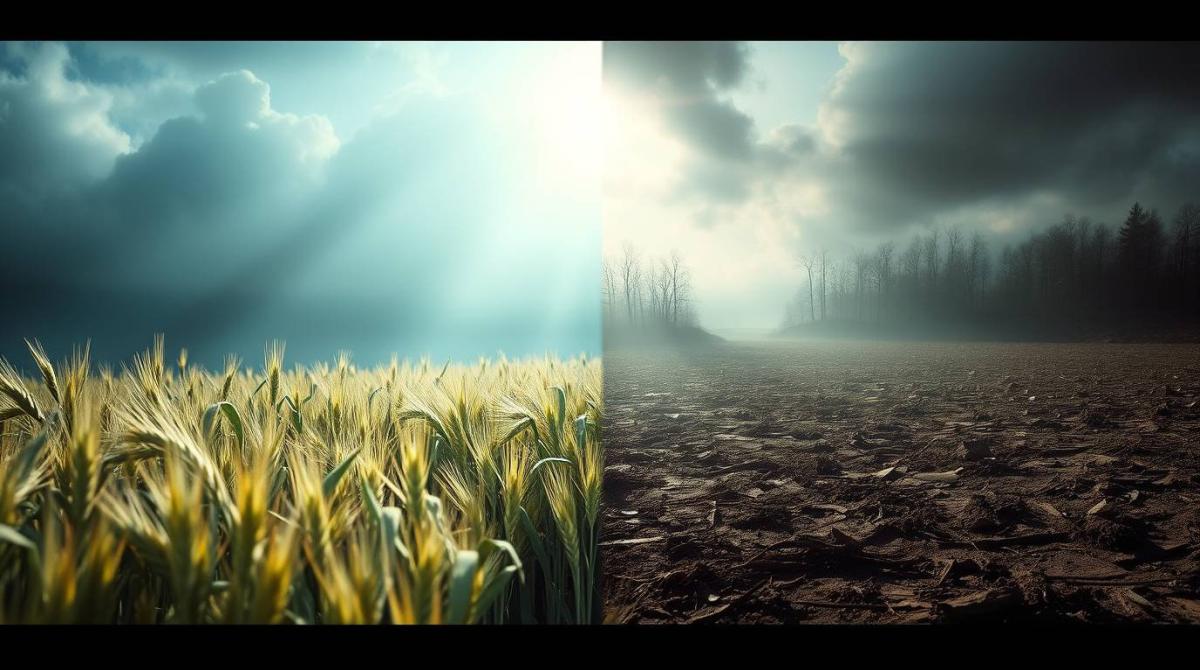
The headlines keep telling you to expect higher food prices. That framing is doing a lot of quiet work. It keeps you calm. It keeps you passive. It positions a supply shock of historic proportions as a minor inconvenience rather than the structural rupture it actually is. This is not a food prices story. This is a harvest story. And the harvest window is already closing.
The headlines keep telling you to expect higher food prices. That framing is doing a lot of quiet work. It keeps you calm. It keeps you passive. It positions a supply shock of historic proportions as a minor inconvenience rather than the structural rupture it actually is.
This is not a food prices story. This is a harvest story. And the harvest window is already closing.
On February 28, 2026, the United States and Israel conducted coordinated airstrikes on Iran, killing Supreme Leader Ali Khamenei and targeting nuclear sites and military infrastructure. Iran’s response was to close the Strait of Hormuz, the 21-mile-wide chokepoint through which roughly 20% of the world’s seaborne crude oil and natural gas transits daily. The IRGC announced that movement through the strait for any vessel going “to and from” the ports of the US, Israel, and their allies is prohibited.
Iran didn’t need a naval blockade to bring traffic to a halt. All it had to do was several drone strikes in the vicinity of the Strait of Hormuz, and all of a sudden, insurers and shipping companies decided it was unsafe to traverse that very narrow waterway.
The insurance-driven shutdown is the mechanism most financial media has underreported. War risk premiums didn’t just increase. They rose from 0.125% to between 0.2% and 0.4% of ship insurance value per transit, an increase of a quarter of a million dollars for very large oil tankers. At that cost structure, most commercial operators simply stopped sailing. The strait is effectively closed not because Iran physically blockades every vessel, but because the economics of transiting it collapsed overnight.
The closure has cascading effects. Iraq, a major oil producer, is having to shut down production in some of its largest oil fields because without being able to export through the Strait of Hormuz, it has nowhere to put that oil.
Oil price shocks are well understood by markets. Traders price them in, hedges activate, and the signal propagates through energy equities within hours. What markets are slower to price is the fertiliser shock, because it operates on an agricultural timetable rather than a financial one.
The Gulf region produces nearly half of the world’s urea and 30% of ammonia, with about one-third of the world’s fertiliser passing through the strait. Urea prices increased by 50% since the start of the war, as of late March 2026.
The timing is the cruelest part of this. Planting season in Europe and North America runs April to May. Nitrogen fertiliser applied in July does nothing for cereal yields. If it is not in the ground now, the yield loss is locked in regardless of when the strait reopens. This is not a price story. It is a volume story. Less grain will be grown this year. The September harvest will reflect the planting decisions being made right now, under conditions of sharply reduced fertiliser access and record-high input costs.
Half of all human food production depends on synthetic nitrogen fertiliser. The gulf states account for a substantial share of globally traded urea, ammonia, and potash. When the transit route for 30% of global fertiliser trade closes during spring planting season, the supply chain does not simply absorb the disruption and move on. The yield cut is already built into the ground, or more precisely, the lack of it.
The International Food Policy Research Institute modelling cited by commentators puts the potential drop in global cereal output at between 10 and 20% if the conflict extends into June. To contextualise that number: global cereal production runs at approximately 2.8 billion tonnes per year. A 10% reduction removes 280 million tonnes from the food supply. That is not a grocery bill story. That is a famine infrastructure story.
This is where the analysis gets genuinely interesting from an investment perspective.
If Iran successfully institutionalises a toll system, the choice of currency could be consequential. Should Iran favour the euro or the Chinese yuan, this could challenge the dominance of the petrodollar system and, by extension, the US military’s role as Gulf guarantor.
Iran’s parliament passed a bill to formalise the collection of tolls on vessels transiting the waterway. Iran is not simply trying to close the strait as a military tactic. It is attempting to convert a geopolitical lever into a permanent revenue and influence mechanism. That is a structurally different objective, and it has different implications for how this crisis resolves.
Several countries have already struck bilateral deals with Iran to allow their vessels safe passage. Ships flying the flags of Pakistan, India, Thailand, Russia, Turkey, China, Iraq, and Malaysia have safely traversed the strait at some point since the war began. The architecture of a post-dollar Gulf energy settlement is not hypothetical. It is being constructed right now, vessel by vessel, deal by deal.
For investors who have been tracking the de-dollarisation thesis, this is the most significant stress test that thesis has ever faced in real time. The question is not whether the petrodollar faces structural pressure. The question is whether this conflict accelerates the timeline from decades to years.
For further context on what de-dollarisation means for portfolio positioning, see The BRICS Currency Question: What It Actually Means for Your Wealth.
Europe is the most acutely exposed major economy to this disruption, and it got there through a series of policy choices that were presented as strategic pivots but were, in reality, lateral moves within the same dependency framework.
Europe spent three years replacing Russian pipeline gas after 2022. The replacement was Qatari LNG and US LNG. Qatar supplies roughly 30% of Italy’s annual gas needs. European gas storage entered this crisis at its lowest level in three years. Now the Qatari supply route runs through the strait that Iran just closed.
Natural gas prices in Europe and Asia, which rely heavily on imported liquefied natural gas, have risen even more sharply than oil prices. European wholesale gas prices are up approximately 70% since February 28. That feeds directly into household energy bills, into industrial input costs, and into the cost structure of the chemical sector that underpins European agricultural supply chains.
Germany’s economy depends heavily on gas-intensive manufacturing. The chemical sector, which produces the fertiliser precursors that European farmers rely on, has already indicated it cannot absorb a 70% gas cost increase without passing it directly down the supply chain. That transmission mechanism lands squarely on food production costs at a moment when farm input costs are already spiking on fertiliser alone.
The LNG disruption is impacting the production of fertiliser, affecting the agriculture industry in the Northern Hemisphere. The price shock and shortage of fertiliser during the spring planting season could reduce the planting and yields of corn in the US and potentially increase global food prices into 2027.
The contrarian read on this crisis is not to pile into oil majors. That trade is already crowded and oil prices are partly being suppressed by demand destruction expectations. The more interesting structural plays are threefold.
First, agricultural commodities. Corn, wheat, and soy are all directly exposed to the fertiliser shock and the yield reduction that is already locked in for the 2026 harvest. Futures positioning in these markets has not fully priced a sustained 10 to 15% global cereal output reduction. CME Group’s agricultural futures data provides live positioning information for investors tracking this.
Second, European energy transition infrastructure. The argument being made in European policy circles, slowly and with considerable resistance, is that the dependency on Gulf fossil fuels is the vulnerability. Every euro spent on domestic renewable capacity eliminates a unit of exposure to Gulf disruption risk. Companies positioned in offshore wind, grid interconnection, battery storage, and heat pump manufacturing are structurally advantaged in a world where European governments eventually reach the obvious conclusion. BloombergNEF’s clean energy transition research tracks capital allocation flows in this space.
Third, alternative fertiliser production. The current crisis will accelerate investment in non-Gulf fertiliser supply chains, including green ammonia production using renewable electricity. This is a decade-long investment theme, but the Hormuz disruption has compressed the policy urgency dramatically. The International Fertilizer Association publishes supply chain data that is useful for tracking where production capacity is being built outside the Gulf region.
The macro overlay that ties all three together is a world in which the US-underwritten Gulf security architecture is visibly failing. The strait has been closed to about 20% of the world’s oil supply since the start of the war, and while relatively little Middle Eastern oil makes its way to America, the closure has roiled global commodity markets which determine the price of oil and gas everywhere. Trump’s own framing, that the strait is “not our problem,” is inadvertently accelerating the logic that other powers, including Iran, China, and eventually Europe, will develop alternative arrangements that do not require US military underwriting.
The delay between cause and visible effect is the mechanism through which political inertia is sustained.
The fertiliser is not in the ground. The yield loss is locked in. The harvest shortfall will arrive in September. The famine conditions in the global south will peak in late 2026 and early 2027. But right now, in April, supermarket shelves are full and the dominant narrative is that food prices will be “a bit higher” next year.
This is the nature of commodity supply shocks. They move on agricultural and physical infrastructure timescales, not on financial market timescales. The market prices the oil price within hours. It will take until August to price the wheat shortage. And it will take until next winter to price the European energy storage deficit.
Investors who understand the lag have an information advantage. The question is not whether this disruption is serious. The International Monetary Fund’s commodity price data already reflects the scale of the price movement. The question is whether the downstream effects on food systems and European industrial output are fully priced into equity markets, agricultural futures, and European bond spreads.
The answer, as of April 2026, is no. They are not.
The harvest that will not happen in September is already a fact. The market simply has not finished pricing it.
The content on MarketMindInvestor.com is for informational and educational purposes only and does not constitute financial advice. Always consult a qualified financial professional before making investment decisions. Commodity and futures markets carry significant risk.