Physical Address
304 North Cardinal St.
Dorchester Center, MA 02124
Physical Address
304 North Cardinal St.
Dorchester Center, MA 02124

Most financial coverage of the current Middle East crisis stops at the oil price. Commentators argue about the Strait of Hormuz, model scenarios involving $15-a-gallon gasoline, and then move on. But there is a much larger chain reaction already in motion, one that connects Gulf desalination infrastructure, Japanese fiscal fragility, and $1.2 trillion in US Treasury bonds into a single slow-moving detonation. If you are an investor, a retiree, or anyone with a 401(k), this is the thread you need to follow.
Most financial coverage of the current Middle East crisis stops at the oil price. Commentators argue about the Strait of Hormuz, model scenarios involving $15-a-gallon gasoline, and then move on. But there is a much larger chain reaction already in motion, one that connects Gulf desalination infrastructure, Japanese fiscal fragility, and $1.2 trillion in US Treasury bonds into a single slow-moving detonation. If you are an investor, a retiree, or anyone with a 401(k), this is the thread you need to follow.
Everyone is watching oil. That is exactly what makes water so dangerous.
Qatar depends on desalination for 99% of its drinking water. Bahrain, Kuwait, Oman, and Saudi Arabia all sit above 70% dependency. Even the UAE, the most economically diversified nation in the region, still draws 42% of its fresh water supply from energy-intensive desalination plants. These are not backup systems. They are the primary lifeline for tens of millions of people.
Iran does not need a nuclear weapon to exploit this vulnerability. Targeted strikes on the power grids feeding those plants, or on the pipeline infrastructure running the facilities, could threaten water supply without touching a single oil refinery. Take out the water, and you do not just crash an oil economy. You threaten the basic viability of the civilization running it. This is a leverage point that most Western analysts have not fully priced into their geopolitical risk models, yet the strategic importance of Gulf water infrastructure has been documented extensively by researchers tracking regional security.
The implication for markets is significant. If the conflict escalates beyond oil infrastructure into water and power systems, the humanitarian and economic fallout would be orders of magnitude more severe than a temporary Hormuz blockade. The oil price shock everyone is modeling may be the least of your concerns.
Brent crude clearing $110 a barrel is a headline. What it means for Japan is a catastrophe in slow motion.
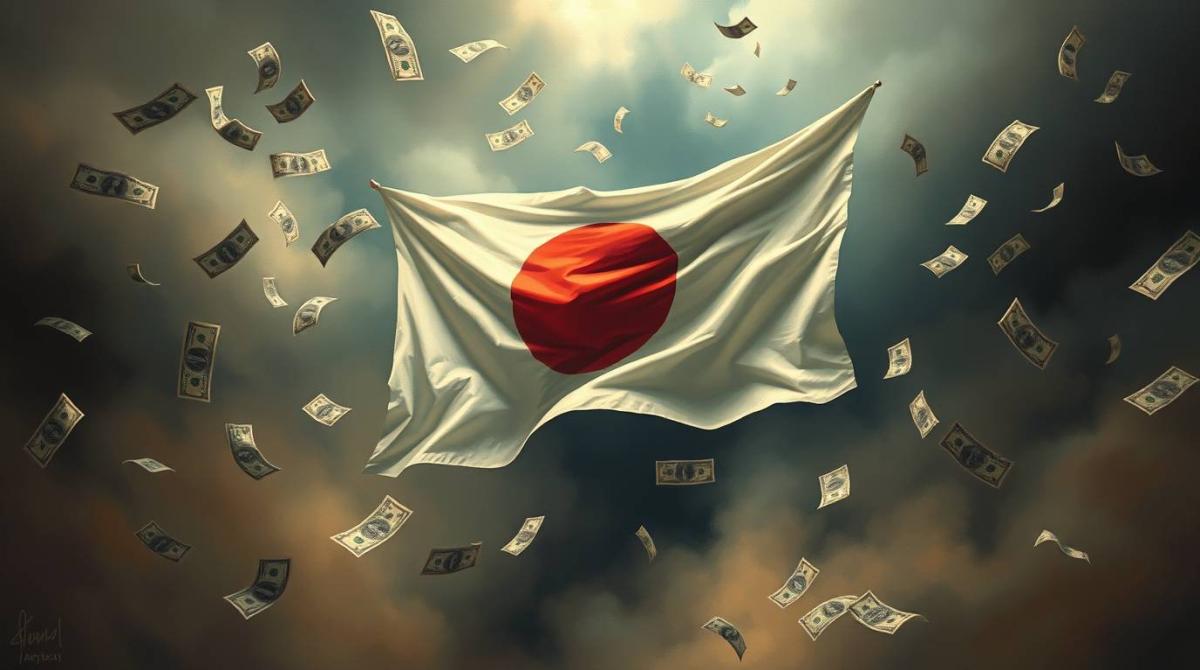
Japan cannot produce a meaningful drop of its own oil. It imports almost everything it burns. When oil prices spike in dollars, a weaker yen multiplies the damage. The dollar index spiked sharply as traders rushed to safety assets, hammering virtually every other currency, including the yen. At the 160 yen-to-dollar level, Japan is not paying $112 for a barrel of Brent. It is effectively paying $130 to $140 in purchasing power terms, because its currency is being eaten alive at the same time its energy import bill is exploding.
Japan’s currency chief has already stated publicly that the situation remains dangerous and that further deterioration cannot be ruled out. The government has signaled it stands ready to act. The Bank of Japan’s own data illustrates just how exposed the country remains to external commodity shocks, with energy imports comprising a dominant share of the current account deficit when the yen weakens meaningfully.
This is not a hypothetical stress scenario. It is happening right now, and the feedback loops are accelerating.
The standard response to a collapsing currency is to raise interest rates. Higher rates attract foreign capital, support the exchange rate, and take pressure off imports. Japan cannot do this. Not meaningfully. Not without lighting its own debt structure on fire.
Japan’s government debt is so large that debt servicing costs are projected to approach 41 trillion yen annually by 2029. A significant rate hike in that environment would cause interest payments alone to consume roughly 30% of the entire government budget within a few years. That math existed before this crisis. Now the crisis is adding a massive external shock on top of a pre-existing structural trap.
So Japan cannot raise rates. It cannot simply let the yen collapse without consequences. It cannot absorb an indefinite energy price shock. The range of available policy responses is narrowing fast. The IMF has previously warned about the long-run fiscal sustainability challenges facing Japan, and those challenges look considerably more acute when a regional war is driving oil to multi-year highs.
Here is where this stops being a story about Japan and starts being a story about you.
Japan holds approximately $1.2 trillion in US Treasury bonds. That is the single largest foreign holding of US government debt on the planet, and it was actually growing in the months leading into this crisis as the Bank of Japan added to the position. If Japan is forced to defend the yen and cannot use interest rates to do it, selling Treasuries is the remaining lever. Selling Treasuries raises yen, stabilizes the exchange rate, and buys breathing room.
But it does not come free. If Japan starts liquidating even a significant fraction of that $1.2 trillion position, Treasury prices fall and yields spike. The relationship between foreign Treasury holdings and US borrowing costs is one of the most closely tracked metrics in global fixed income markets. The 10-year yield is already sitting at elevated levels. The last time yields crept meaningfully higher, markets dropped 15 to 20% before policy pressure forced a course correction. The administration understands exactly what that yield level represents as a ceiling.
Higher yields do not stay in the bond market. They flow directly into mortgage rates, auto loans, credit card rates, and corporate borrowing costs. They compress earnings multiples. They slow hiring. A recession does not arrive with a press release. It arrives in a quarterly earnings report that is suddenly far uglier than the analyst consensus predicted.
JP Morgan has already modeled the scenario. If US crude reaches $120 a barrel, inflation climbs approximately 2% above baseline. GDP contracts between 1.25% and 1.5%. Add the market drawdown that tends to accompany that kind of energy shock, currently already in progress in the range of 15%, and the total GDP impact approaches 3%. That is not a slowdown. That is a recession by any conventional definition.
The policy response has been to quietly expand oil supply through back channels. Treasury Secretary Bessent’s decision to lift certain sanctions on Russian oil and allow Iranian crude to continue flowing into global markets despite the public posture of the conflict reflects how seriously the administration is treating the oil price as the critical variable. The logic is to flood the market with enough supply to keep energy from becoming a persistent structural shock.
The problem is that this approach has limits. There is only so much spare capacity in the world. If the conflict drags on and demand remains high, persistently elevated energy prices become the new baseline. At that point, Japan’s hand is forced, and the Treasury market absorbs the consequences. This dynamic connects directly to the broader de-dollarization pressures and geopolitical realignment covered in depth in our analysis of what a fragmenting global financial order means for contrarian investors.
Layered underneath the Japan Treasury risk is something even less quantifiable. The yen carry trade, where investors borrow in cheap yen to invest in higher-yielding assets elsewhere, has been one of the defining structural features of global markets for years. Estimates of the total exposed positions range from $260 billion on the conservative end to over a trillion dollars. Nobody actually knows how large the unwind risk is, because these positions are distributed across thousands of counterparties and instruments.
What we do know is that a rapid yen appreciation, which tends to happen when carry trades unwind, can cause cascading liquidation across asset classes that appear completely unrelated to Japan. Equities get sold. Emerging market positions get closed. Risk assets fall together. The August 2024 yen carry unwind gave markets a brief preview of how fast that contagion can move.
This is not one story. It is five stories happening simultaneously, and mainstream financial media is covering exactly one of them at a time.
The Gulf water and energy crisis is story one. The yen collapse and Japan fiscal trap is story two. The Treasury yield pressure and its effect on US borrowing costs is story three. A Federal Reserve that has not taken further rate action off the table because inflation remains sticky is story four. And a Treasury Department that has been quietly shifting issuance toward shorter-term debt to obscure the true long-run cost of US borrowing is story five.
Each thread has a direct line to your wallet. None of them is fully priced into markets yet, which means the institutions repositioning themselves right now are doing so while retail investors are still looking at last quarter’s portfolio statement and assuming things are broadly fine.
The contrarian read is straightforward. Energy, hard assets, and inflation-resilient positions look very different in this environment than they did twelve months ago. The question is not whether the chain reaction is real. The question is whether you are looking at the full board before the next move is made, or waiting until after it.
Note: Always conduct your own research before making investment decisions. This article is for informational purposes only and does not constitute financial advice.